

A former British Army soldier who was once a fixture on national recruitment posters has secured a financial settlement and an apology from the Ministry of Defense after claiming she endured more than a decade of racist and sexist abuse linked to the campaign.
Kerry-Ann Knight, 33, accepted the settlement from the British government in June, but the exact amount remains undisclosed.
As part of the settlement, the MoD did not have to admit liability.
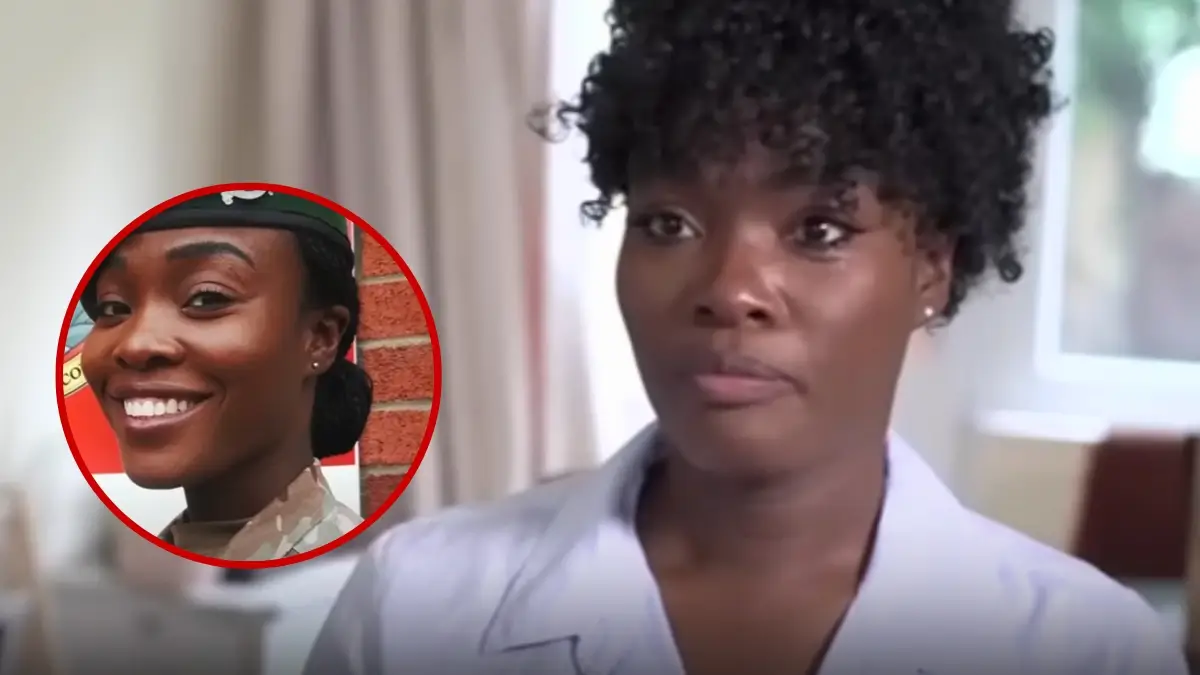
Back in 2012, while still in training, Knight appeared on a striking national recruitment poster, which carried the slogan: “Your army needs you and your self-belief.”
She exuded confidence in an iconic pose, believing that her image would help transform perceptions and promote inclusivity while paving the way for other young Black women.
Instead, her involvement in the campaign backfired and exposed her to racism and sexual harassment throughout her 12 years of service.
Knight claimed the abuse she faced was largely due to her presence on the recruitment posters, which she felt sparked resentment from fellow soldiers who believed she did not deserve the spotlight as the only Black female soldier in her unit.
When Knight was chosen to feature on a propaganda poster, she thought it was because of her accomplishments during training. Reflecting on her experience, she told the Guardian, “I didn’t know it was because I was going to be the only Black woman in that regiment. I didn’t know what I was in for.”
After enlisting at age 20 and completing her training, Knight joined the 26 Regiment Royal Artillery unit and was stationed in Germany.
Knight said she carried a “bright hope that I’m helping to change things” but was confronted with a harsher reality.
“There was a lot of sexism. However, when you add race into the mix, for me, it felt multiplied by ten.”
Later, Knight took a new assignment as an instructor at the Army Foundation College in Harrogate.
Her role involved training new recruits who enlist at 16 and 17.
Knight soon realized she was not welcome there either. In her witness statement, she described how her colleagues “took turns shouting ‘watermelooooon!’ every time I walked into the room.”
She noted that “the others would laugh” each time, leaving her feeling “humiliated and mocked,” she told BBC News.
Knight said she began to realize that her role in the recruitment campaign had exposed her to severe discrimination and abuse within the Army, which led to her abrupt departure.
“I had to serve alongside people who claimed to support the KKK, Britain First and/or the English Defence League,” she said in her witness statement provided to the tribunal, according to the Guardian. She said male soldiers would refer to her as a “black b-tch” but add: “I’d still shag you though.”
“One evening, I returned to my room to find someone had drawn images of huge black penises all over the wardrobes in my room,” the statement read.
Knight overheard colleagues discussing horrific acts such as “getting lynched” and being “tarred and feathered.” One even mentioned putting her in a “hot box,” a reference to a torturous scene from “Django Unchained” where a Black female enslaved African is locked in a wooden coffin. Knight noted that this film, directed by Quentin Tarantino, was frequently played by her colleagues, often on repeat.
Over several years, Knight submitted complaints about racism and misogyny, providing evidence such as WhatsApp screenshots and audio recordings. Despite these efforts, she was removed from her role training junior soldiers due to concerns about her “mental or emotional state,” which the army cited as the reason for her removal.
“I think when it got to that stage, that’s when I just realized that the army is institutionally racist,” Knight said. “And they would go above and beyond in order to discredit me as an individual, in order to protect the army image, to portray that racism doesn’t exist, even though it was there in black and white.”
Despite her detailed complaints about constant derogatory remarks, threats, and humiliating incidents, the abuse continued, leading her to pursue legal action.
Knight, who grew up in Nottingham, served in the Army for more than a decade and left as a corporal earlier this year after filing an official complaint.
The settlement and public apology from the Army came after she brought her case before a military tribunal in December 2022. Her legal defense was aided by the Equality and Human Rights Commission.
Her solicitor, Emma Norton, from the Centre for Military Justice, said:
“For the army, it was not the racists that needed to be dealt with it, it was Kerry-Ann, because she’d had the audacity to complain about racism and misogyny. It is all dreadfully familiar and shows again that, in the British army, it’s worse to accuse someone of racism than it is to be racist.”
In last month’s apology, the army stated: “The army accepts that you had to work in an unacceptable organizational environment where you experienced racist and sexist harassment. There was a failure within the army in not responding properly to that environment or your complaints about it.”
An MoD spokesperson added, “We do not tolerate abuse, bullying or discrimination of any kind and encourage any personnel who believe they have experienced or witnessed unacceptable behaviour to report it. All allegations of unacceptable behaviour are taken extremely seriously and are thoroughly investigated. If proven, swift action will be taken.”