Sinners Star Jayme Lawson Slams BAFTA and BBC Over N-Word Incident, Says Artists Are Celebrated But Not Protected
March 7, 2026
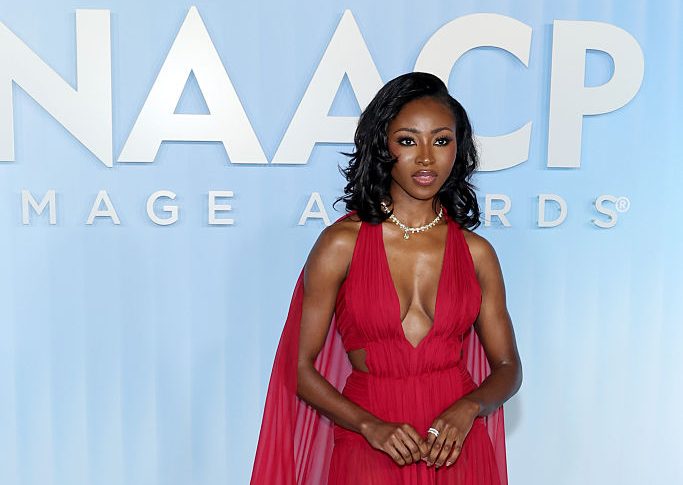
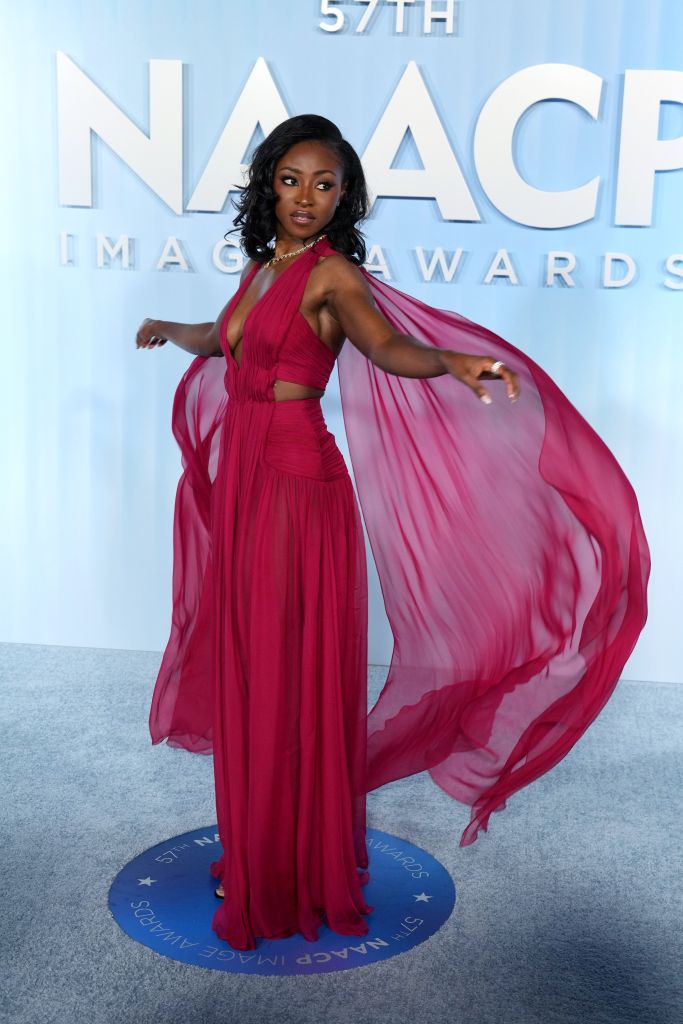
At the NAACP Image Awards, Jayme Lawson called out BBC & BAFTA for what she described as a “careless” mishandling of the N-word incident involving her fellow Sinners stars Michael B. Jordan and Delroy Lindo. She further asserted that the organizations also “exploited” John Davidson and his Tourette’s Syndrome. “They want to celebrate our art, but won’t protect it!” Lawson declared.
Just like her character Pearline, Jayme Lawson didn’t mince words on the NAACP blue carpet. In a chat with The Hollywood Reporter, she extended her support to her co-stars in the wake of the BAFTA backlash, yet redirected attention toward choices she deemed not only reckless toward Sinners’ production designer Hannah Beachler, but also indicative of broader institutional failures in accommodating Davidson’s condition.
Love MadameNoire? Get more! Join the MadameNoire Newsletter
We care about your data. See our privacy policy.
“I’ll first say a big shoutout to Mike and Delroy. Let’s continue to honor them for how they handled that in real time, the grace and the dignity that they exercised. And the whole home team, everybody that was out there really carried themselves well,” Lawson said.
“I think the events this weekend exposed a couple of things: Institutionally, we still don’t understand what ‘inclusion’ means. Just because you invite someone into a space, but you don’t provide the necessary resources to keep them and everyone else in that room safe by them being there, that’s not inclusivity. That’s exploitation! That man’s disability got exploited that night,” she repeated. “That’s the BAFTAs’ fault.”
While the most publicized moment occurred when Lindo and Jordan appeared onstage to present, Lawson pointed out that BAFTA allowed “multiple offenses” to unfold across the night. Instead of supplying resources to shield Davidson while he attended, the awards production reportedly put a microphone in front of him, amplifying his involuntary verbal tics during the ceremony.
“And then the BBC, to air what they aired, is careless. And not some haphazard accident, no. A real lack of care was exercised for those two Black men,” she continued about Jordan and Lindo.”
“We know the BBC knows how to take care of what they care about, right? Because they censored a whole bunch of others. They went so far as to make sure certain things weren’t topics of conversation. They censored Akinola’s speech, the director of My Father’s Shadow, which is an amazing film, by the way,” Lawson said.
Lawson noted that the BBC’s selective censorship underscored their carelessness. Whether the network intervened to silence Akinola Davies Jr. saying “Free Palestine” in his acceptance speech, or allowed the N-word to air despite a two-hour broadcast delay, the choices were made at the expense of Black creatives.
“So you censored one Black man, you failed to protect two others, and our production designer, Hannah [Beachler]. You do not care for our dignity, our humanity. You want to celebrate our art, but you won’t protect,” Lawson said.
The Running Man actress appeared visibly moved as she returned to praising director Ryan Coogler and the welcoming, protective atmosphere she associates with the NAACP.
“And that’s why we celebrate Sinners, that’s why we celebrate Ryan [Coogler], that’s why we show up to the NAACP. Because those are spaces where we felt safe, where we feel safe,” she concluded.
Lawson proved once again that she doesn’t need long to make a powerful impact, as her concise yet pointed remark quickly became a viral moment. Her fearless rebuke highlighted how those in charge at BAFTA and the BBC failed Davidson just as much as anyone affected by his involuntary tics, which are beyond his control. From the hot mic and the broadcast to the tepid apology, everyone impacted that night deserved far better, and Lawson made that need obvious, loudly and clearly.
Danielle Brooks
I am a staff writer at New York Beacon, where I focus on culture, entrepreneurship, and the emerging voices redefining Black America. My work highlights innovators, artists, and founders whose stories often unfold beyond mainstream headlines but shape communities in meaningful ways. Through precise reporting and thoughtful storytelling, I aim to document progress, challenge narratives, and contribute to a stronger Black press tradition.