
Officials at the United Nations persist in urging reparations for Africans and people of African descent as a path to justice.
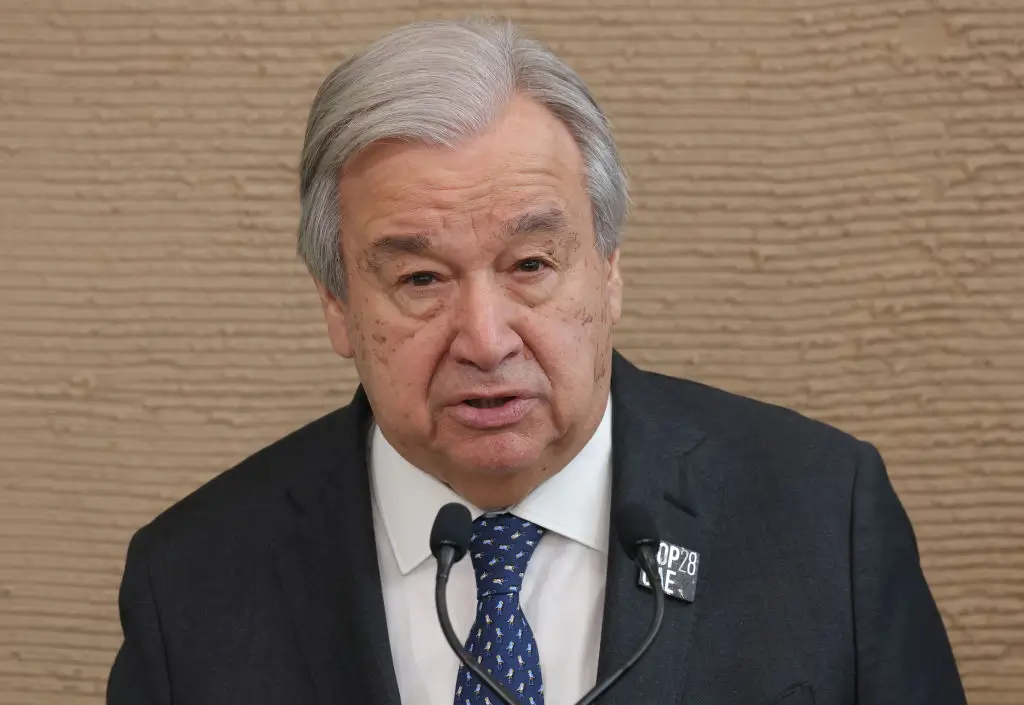
On the occasion of the International Day of Remembrance for the Victims of Slavery and the Transatlantic Slave Trade, the UN’s leader called for reparations for slavery, arguing they are essential in the fight against systemic racism.
“We call for reparatory justice frameworks to help overcome generations of exclusion and discrimination,” UN Secretary-General António Guterres said in a March 25 statement, NBC News reported.
Guterres added: “We seek the space and necessary conditions for healing, repair and justice. Descendants of enslaved Africans and people of African descent are still fighting for equal rights and freedoms around the world.”
The statement followed a UN report released last September, which found that no country had thoroughly acknowledged the past or addressed the ongoing consequences of the violent displacement of an estimated 25 million to 30 million people from Africa over more than four centuries, according to Reuters.
The UN report proposed slavery reparations as a means to compensate for the harm inflicted on enslaved Africans.
The report stated, “under international human rights law, compensation for any economically assessable damage, as appropriate and proportional to the gravity of the violation and the circumstances of each case, may also constitute a form of reparations.”
According to the report, “In the context of historical wrongs and harms suffered as a result of colonialism and enslavement, the assessment of the economic damage can be extremely difficult owing to the length of time passed and the difficulty of identifying the perpetrators and victims.”
During the UN General Assembly, Hilary Beckles, chair of the Caribbean Community (CARICOM) reparations commission, said, “This is the movement that will signal the triumph of good over evil,” NBC reported.
The Caribbean Community, CARICOM’s reparations commission outlined guidelines for reparations, including debt cancellations, addressing public health crises and illiteracy, issuing “a sincere formal apology by the governments of Europe,” and tackling “massive psychological trauma upon African descendant populations.”
“Over 10 million Africans were imported into the Caribbean during the 400 years of slavery,” the CARICOM report stated. “For over 400 years Africans and their descendants were classified in law as non-human, chattel, property, and real estate. They were denied recognition as members of the human family by laws derived from the parliaments and palaces of Europe.”
According to several news reports, a recent poll from the Repair Campaign, which is formulating CARICOM’s nations reparations plans, revealed that 4 in 10 people in the United Kingdom agreed the Caribbean should receive financial compensation. In addition, 3 in 5 agreed a formal apology was due.
Meanwhile, in the United States, forms of reparations have been proposed by city, county, state, and national governments or private institutions.
Some reparation examples include individual monetary payments; removing monuments and streets named after owners and defenders of slavery; settlements; scholarships; waiving of fees, land-based compensation related to independence; apologies and acknowledgements of the injustices and naming a building after someone.
In a move towards racial justice, New York approved in late December a commission to study slavery’s history and the possibility of reparations. Gov. Kathy Hochul signed the legislation, authorizing a commission to examine slavery’s adverse effects on African-Americans. The bill, introduced by Assembly Member Michaelle Solages, follows a racially motivated mass shooting in Buffalo in 2022.
There are a growing number of local and state governments exploring ways to address reparation payments for slavery. For instance, California has established a commission and approved a list of recommendations, such as forming an agency that would determine appropriate compensation and issue a public apology.
California’s Reparations Task Force is the largest state effort to investigate reparations so far. But commissions to study reparations have been largely happening at a city or county level.
Still, cities like Evanston, Illinois, St. Paul, Minnesota, and Providence, Rhode Island have all investigated and worked toward creating and implementing programs under the auspices of reparations.