
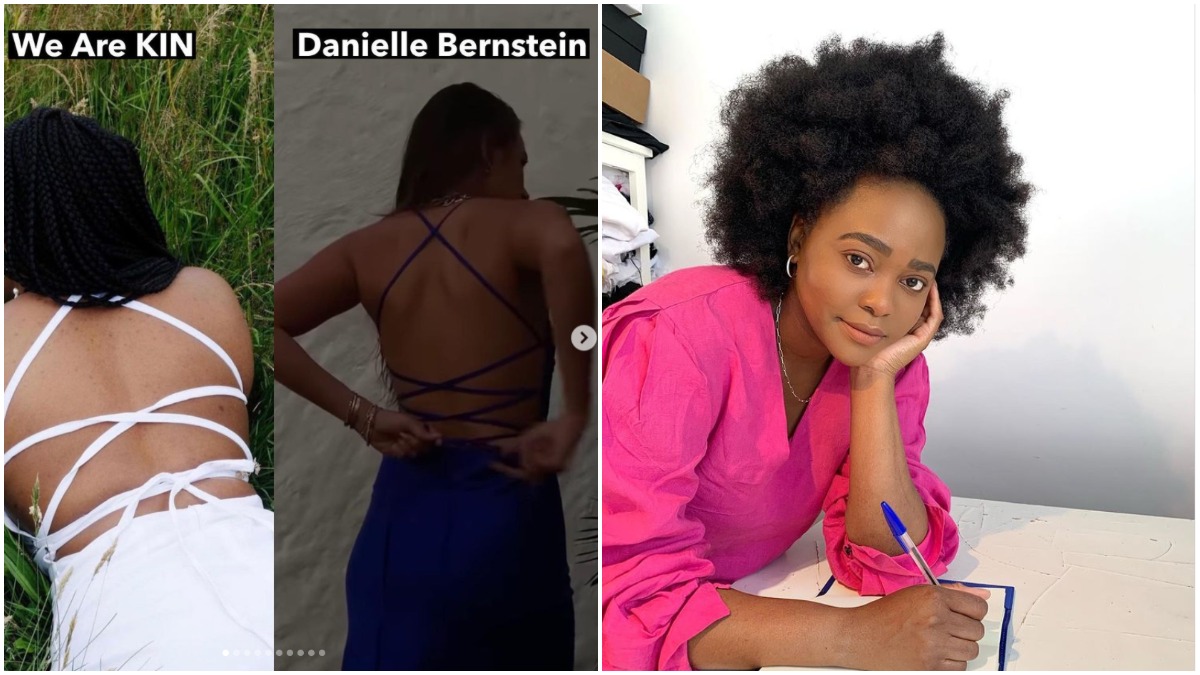
A white designer finds herself under scrutiny after being accused of appropriating a dress concept from a Black-owned fashion label.
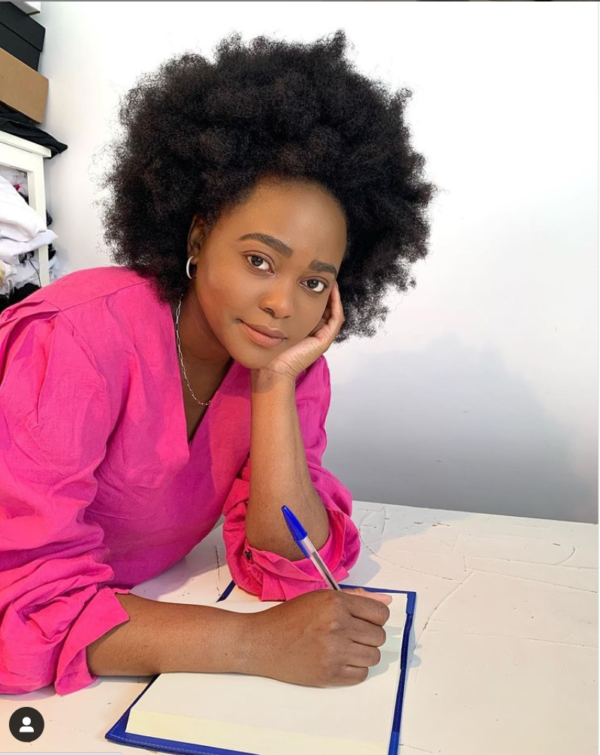
In the spotlight is fashion influencer Danielle Bernstein, whom Ngoni Chikwenengere, the founder of We Are KIN, says copied a maxi-dress design for Bernstein’s WeWoreWhat collection.
Chikwenengere took to Instagram on Sunday, writing, “I’m deeply saddened to have to share this, but I’ve become another casualty of @weworewhat and Danielle Bernstein’s campaign against small designers.” She attached photos showing her own We Are KIN dress alongside a look from Bernstein’s WeWoreWhat line.
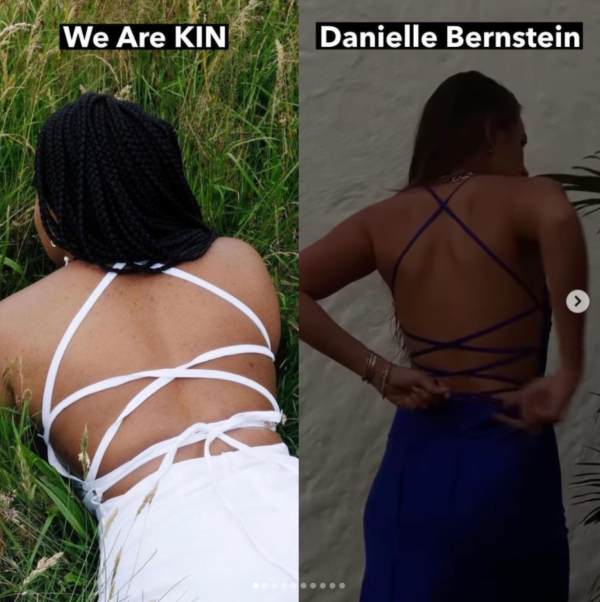
“This week, Danielle and WeWoreWhat have been posting photos of the Strappy Maxi from their new collection. It is identical to mine. The one I have poured my heart and soul into, that is designed by me and handmade for every customer with ethically sourced materials each season,” Chikwenengere wrote. At the time, Chikwenengere had about 18,000 Instagram followers while Bernstein, a New York Times bestselling writer who partnered with Macy’s to generate $13 million in revenue in one year, had more than 2 million followers.
Bernstein, who has faced similar claims in the past, insists she did not copy the dress’s design. In an Instagram Story she wrote, “I am sick of being accused of stealing designs or content that I ABSOLUTELY DID NOT.”
She continued, “I am tired of screenshots and conversations without context or dates and part of something that looks alike. There will always be something that someone can say looks similar.”
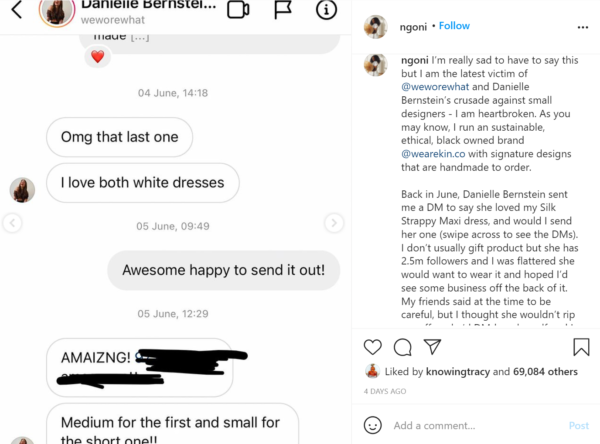
In Chikwenengere’s post, she included screenshots of what appear to be direct messages between her and Bernstein.
“Back in June, Danielle Bernstein sent me a DM to say she loved my Silk Strappy Maxi dress, and would I send her one (swipe across to see the DMs). I don’t usually gift product but she has 2.5m followers and I was flattered she would want to wear it and hoped I’d see some business off the back of it,” Chikwenengere explained. “My friends said at the time to be careful, but I thought she wouldn’t rip me off as she’d DMd me herself and I like to think the best of female founders you know?”
Bernstein accused Chikwenengere and other designers who have claimed she’s ripped them off of chasing “15 minutes of fame” through the “unfounded and unfair” accusations.
“1. I did not reach out asking for the dress. 2. I did not copy the dress,” Bernstein said.
She said that Chikwenengere took the direct messages out of context and that the We Are KIN owner originally offered to gift her the dress but later deleted the message. She said the only similarity between the two dresses is the straps and that “tie back straps can be found a million ways with a quick Google search.”
Bernstein also said she offered over the phone to share sketches with Chikwenengere to prove the design was not copied. She added that the WeWoreWhat team has received death threats as a result of Chikwenengere’s accusations.
Back in August, Bernstein was accused of stealing a signature tissue paper packaging design from Brooklyn-based lingerie store The Great Eros.
WeWoreWhat filed a lawsuit against The Great Eros alleging the company’s allegations were not credible in response to a lawsuit by The Great Eros that claimed copyright infringement over the alleged copied tissue paper design. The legal battle is ongoing.