
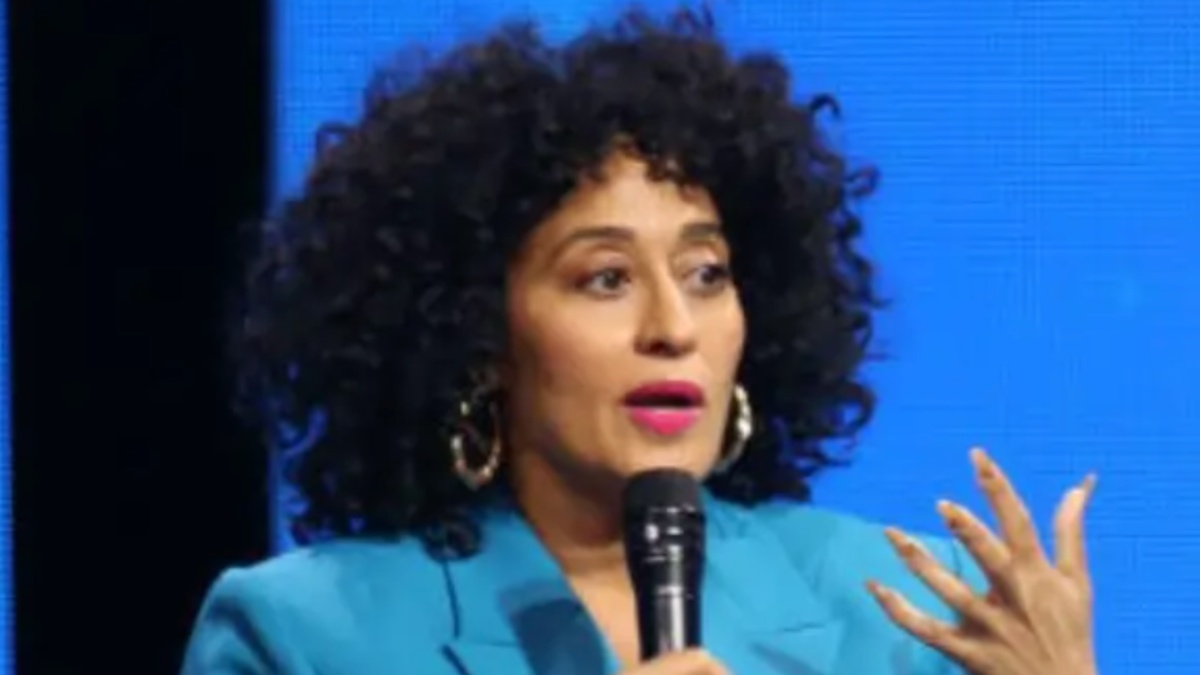
Fans of former “Black-ish” star Tracee Ellis Ross are rallying to defend her.
The actress was publicly disrespected by a colleague she’s had a very long relationship with.
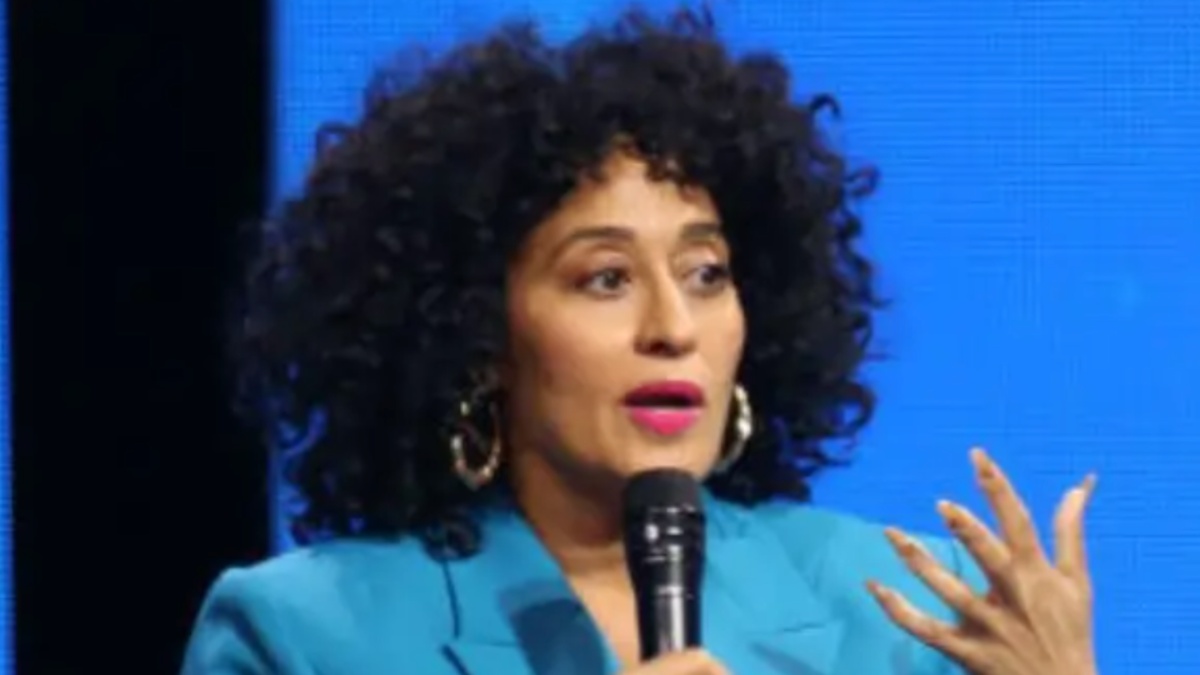
The 53-year-old actress and fashion icon is the daughter of singer Diana Ross.
Her father is music manager Robert Ellis Silberstein.
She learned to embrace her natural hair growing up as a child actor and model.
But she hasn’t always received the respect she deserves, and her latest viral moment proves it.
‘You’re on TV — You’re Representing Black People’: Tracee Ellis Ross Recalls an Instance of Backlash She Received for Wearing Her Natural Hair on ‘Girlfriends’
Ross’ fans and women alike are outraged over a Vogue article titled “16 Flattering Haircuts for Thick Hair, No Matter Your Texture or Length,” which was published on April 14.
It featured a photo of Ross rocking an Afro and a perplexing description.
The article read, “Defined by hairstylist Tom Smith as a ’rounded haircut with a soft, airy silhouette,’ the cloud bob plays well with wavy, curly, and coily thick hair that has natural movement and volume.”
A clip of the post was shared on X with the caption, “It’s 2026 and they’re calling an Afro a ‘cloud bob.’”
After receiving backlash on social media, the article was updated, but that hasn’t stopped fans and supporters of Ross from roasting the fashion magazine.
Actress Yvette Nicole Brown also shared the Vogue clip on Threads with the caption, “Afro. The word they’re looking for here is: AFRO. And it wasn’t created by that Tim Smith dude. Cloud bob my [emoji].”
Another fan shared the clip on X with a sentiment felt by many online. “I’m so tired of the colonizer nonsense. A cloud bob? Seriously? That is an Afro. It’s been an afro for decades and it will remain an Afro. GTFOOHWTBS! Cloud bob. WTF?”
“Cloud bob is pissing me and my homegirls clean off,” another user noted.
A cloud bob is the craziest sh— I’ve heard about Black hair.
And meanwhile, her mom dazzled with that hairstyle! 💖 pic.twitter.com/28gechn5CF— Claire Huxtable (@Garyville_Girl) April 16, 2026
One fan shared a photo of Diana Ross sporting a crown in her Motown years. The post was captioned, “A cloud bob is the craziest sh— I’ve heard about Black hair. And meanwhile, her mom dazzled with that hairstyle!”
Vogue’s update included removing the “cloud bob” part from the article, which fans noticed. “They removed it. Ridiculous bs. An Afro being called a cloud bob. And what is a bixie? That’s the same pixie cut we all had in the 1990s.”
Despite the outrage, Ross smiled in a photo shared on her Instagram Story on April 16 though instead of rocking her afro, she pulled her hair back in a low bun.
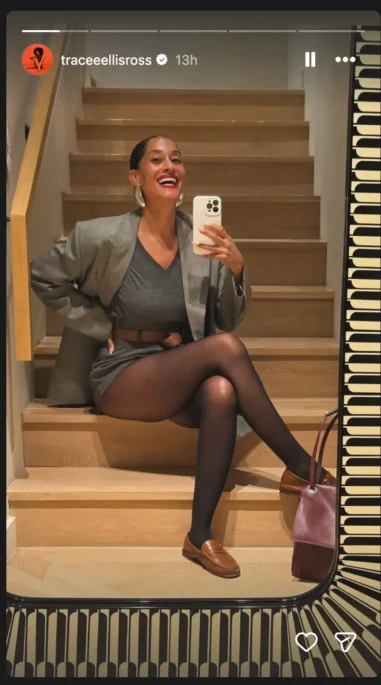
The “Girlfriends” star began embracing her natural curly hair after years of trying to conform to society’s standards, sharing photo montages on Instagram with messages about her hair evolution throughout her life.
“A TALE OF TEXTURES,” Ross wrote in 2020. “My hair has played many a role throughout my life. When I was a teen, I didn’t understand it so I tried everything under the sun to make it do what I thought it should. The results were not great. Namely, it was fried. But, once I began listening to my hair and started figuring out what it liked, my true curl pattern emerged.”
She also spoke about going grey, which she says has changed the texture of her hair.
“By the time I made it onto ‘Girlfriends’ my hair was healthy and POPPIN,” she continued. “But as I have grown and matured my texture has evolved. My hair is now turning grey (evidence of my life and my years). And while the grey has changed my texture and the dye I use to cover it has loosened my pattern, I finally know my hair inside and out.”
Ross added that she wasn’t ready to embrace going gray quite yet, but she now loves her natural hair.
“Taking the time to accept, understand and love my hair mirrors the relationship I have with myself,” she wrote. ” I have grown to love and appreciate my hair in all of its seasons. Because hair love IS self love.”
View this post on Instagram
Danielle Brooks
I am a staff writer at New York Beacon, where I focus on culture, entrepreneurship, and the emerging voices redefining Black America. My work highlights innovators, artists, and founders whose stories often unfold beyond mainstream headlines but shape communities in meaningful ways. Through precise reporting and thoughtful storytelling, I aim to document progress, challenge narratives, and contribute to a stronger Black press tradition.