
As President Donald Trump’s trade war with America’s longtime ally and northern neighbor grew more heated, he floated a bizarre notion to rename one of the Great Lakes.
Yet the stunt backfired when a Michigan Democrat proposed a different name, using a trusted Trump aide to land a blow where it would hurt most.
First, Trump again targeted Canada in a social media post on Tuesday morning, continuing his grievances about trade talks that had collapsed the prior Friday.
“Canada has been ‘Ripping Off’ the U.S.A. for decades. They have been slapping our farmers with 400% tariffs, and more. They have driven many wonderful American companies out of business,” the president lamented.
‘So Despicable’: Natalie Harp, a Trump Aide, Labeled a ‘Monster’ After Racist Attacks on Barack and Michelle Obama Surface
He went on with a long list of grievances before adding, “They feel entitled, but they are not a State, and will be entitled no longer!” a line he has repeated in recent days.
In a second post, he insisted the U.S. has been losing about $60 billion each year to Canada for the last decade.
He followed that with an image showing a map of Lake Ontario, its name crossed out in red and replaced with “LAKE AMERICA” written in gold.
Michigan Congresswoman Debbie Dingell swiftly joined the discussion, noting that her state shares a border with Ontario.
Channeling a tactic used by Georgia Senator Jon Ossoff, Dingell wrote on X, “Let’s just call it Lake Natalie so you’ll start safeguarding our Great Lakes.”
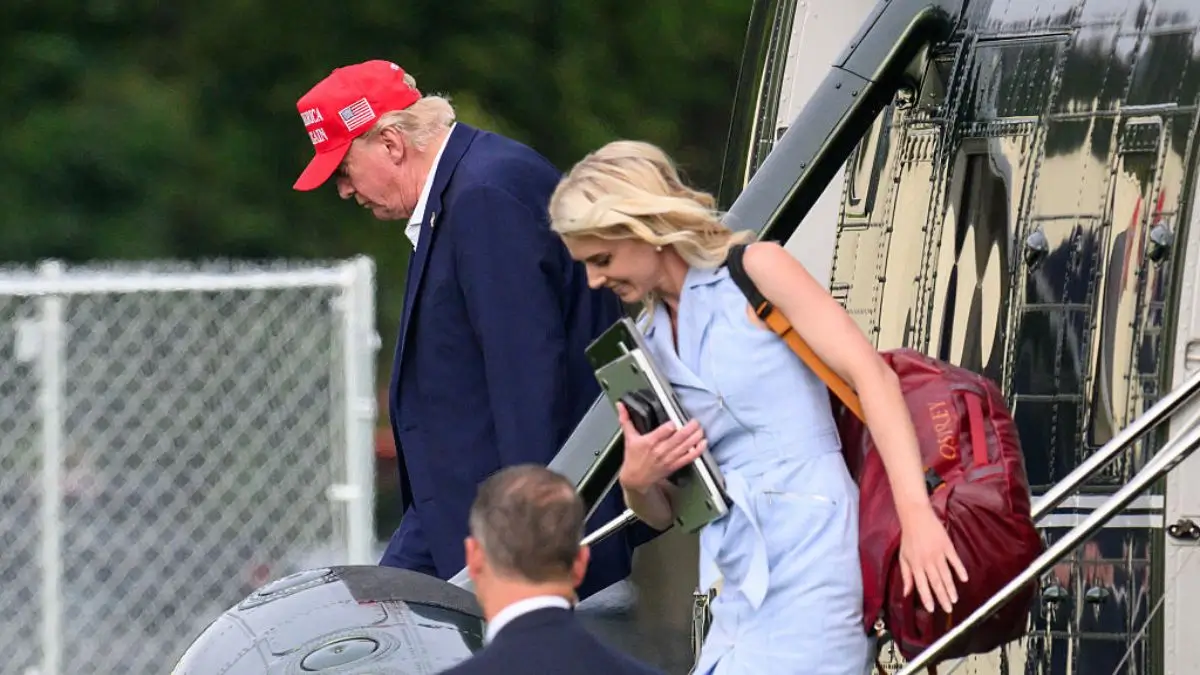
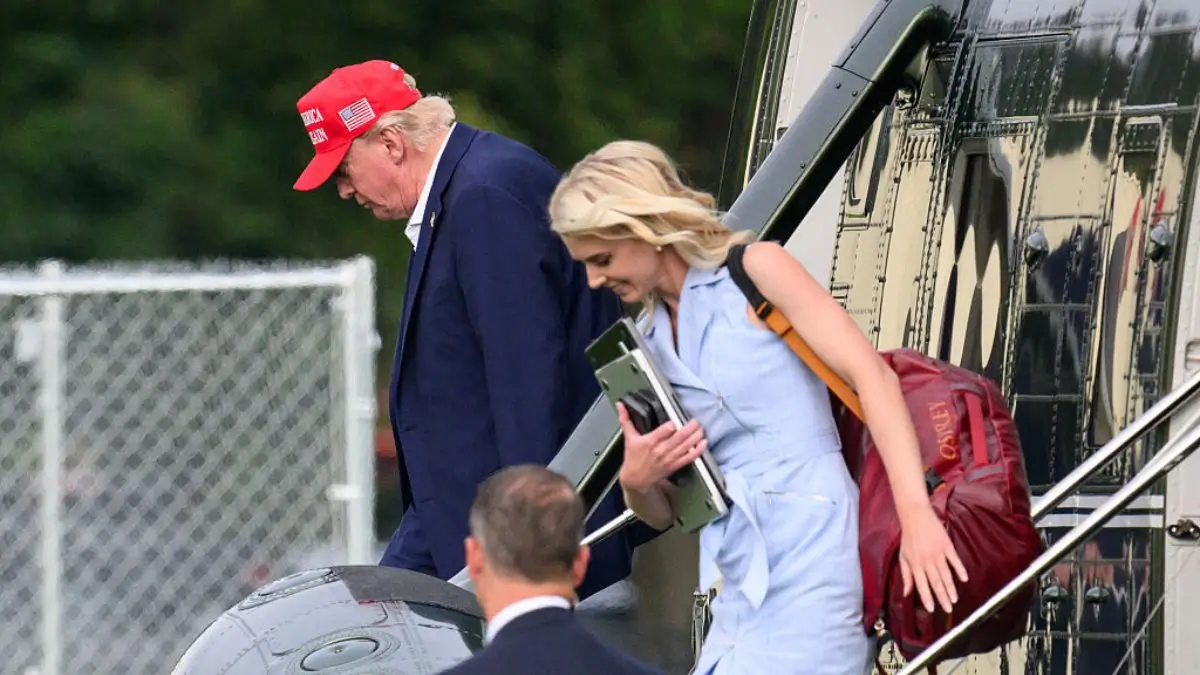
The remark pointed to Trump’s close aide, Natalie Harp, who has recently grabbed headlines after secretly leaving Turkey with the president on a decoy flight.
She, Trump, and a handful of other officials slipped away from Air Force One behind a catering truck, transferring to a military jet bound for England after a NATO summit amid a reported Iranian threat.
Other administration staff, security personnel, and the press stayed aboard Air Force One.
Ossoff provoked anger among Trump supporters when he referenced Harp during a campaign speech in Atlanta on August 16.
The Georgia Democrat faced sharp rebukes in the MAGA universe for suggesting the president would rather “build his ballroom and travel with Natalie” than “do the job” of the presidency.
The MAGA orbit erupted in response to Dingell’s post.
“Attacking a cancer survivor isn’t the flex you think it is, Debbie. Go back to sleep,” quipped one X user, posting beside a photo of a sleeping Dingell in Congress.
Another added, “What a disgraceful person you are. How embarrassing you were as a congresswoman.”
And the abuse continued.
“You’re an embarrassment to the great State of Michigan,” one ardent MAGA commenter declared.
A different post also mentioned Harp as a cancer survivor, stating, “You are a pathetic shriveled old shrew – shame on you for attacking a bone-cancer-surviving woman!”
Whether Harp is indeed a cancer survivor remains unclear. She has credited Trump with “saving her life” by supporting access to experimental treatments during his first term, but whether she survived cancer or another illness has not been independently verified.
Trump’s proposal to rename Lake Ontario follows an escalating clash of rhetoric between the president and Ontario Premier Doug Ford.
Ford told CTV on Monday that Trump “can kiss my a**” and warned of potential power cuts to the United States from Canadian sources, according to Mediate.
Trump responded with a post on Truth Social.
“Lots of ‘bluster’ from Doug Ford, the Premier of Ontario, who is better known as the less charismatic, less intelligent, and overall less impressive brother of the late, great Rob Ford. America has been carrying Canada for decades, but that era is over!”
New 50% tariffs on roughly $20 billion of Canadian imports took effect Saturday after U.S.-Canada trade talks collapsed. The broad list of targeted goods includes building supplies, liquor, certain clothing, and sports equipment—including hockey sticks.
In retaliation, Canada announced plans to implement matching tariffs starting Sept. 8 on a range of U.S. products, including steel, dairy, appliances, agricultural equipment, pulp and paper, and electronics.