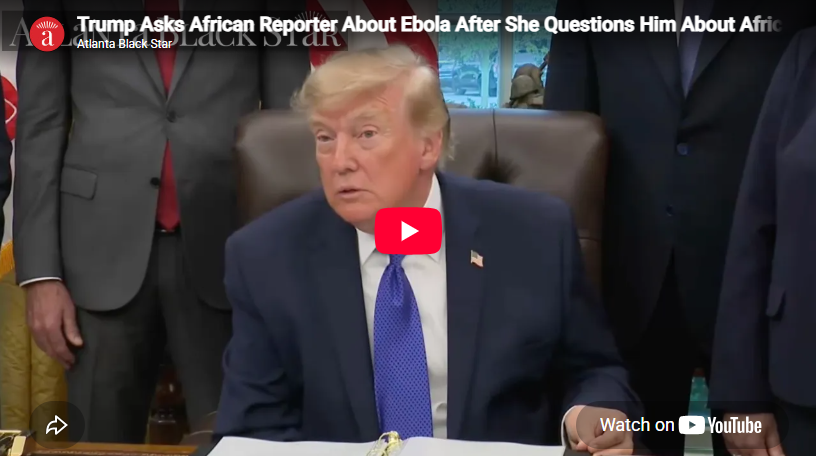
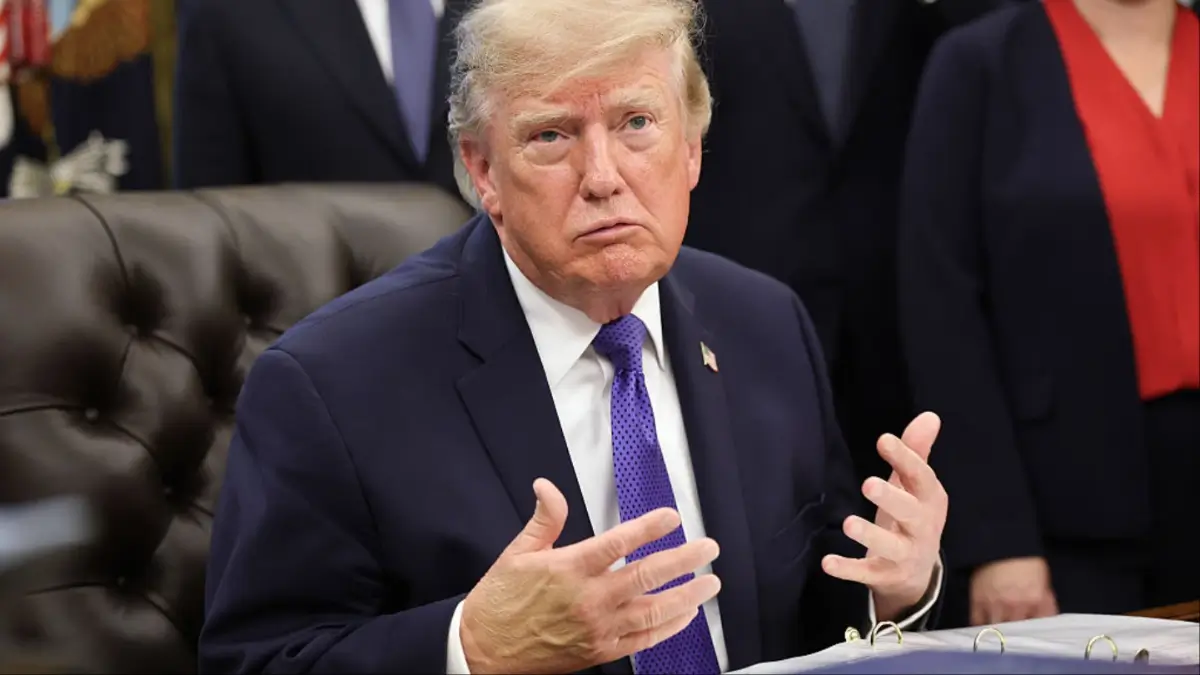
In the Oval Office on Monday, President Donald Trump unveiled plans for a $15 billion steel mill in Iowa, while an African journalist sought to steer the discussion toward a far more pressing crisis: the fighting in the Democratic Republic of Congo.
However, before she could finish detailing what she had observed on the ground, Trump cut her off with a teasing question.
“How is Ebola going?”
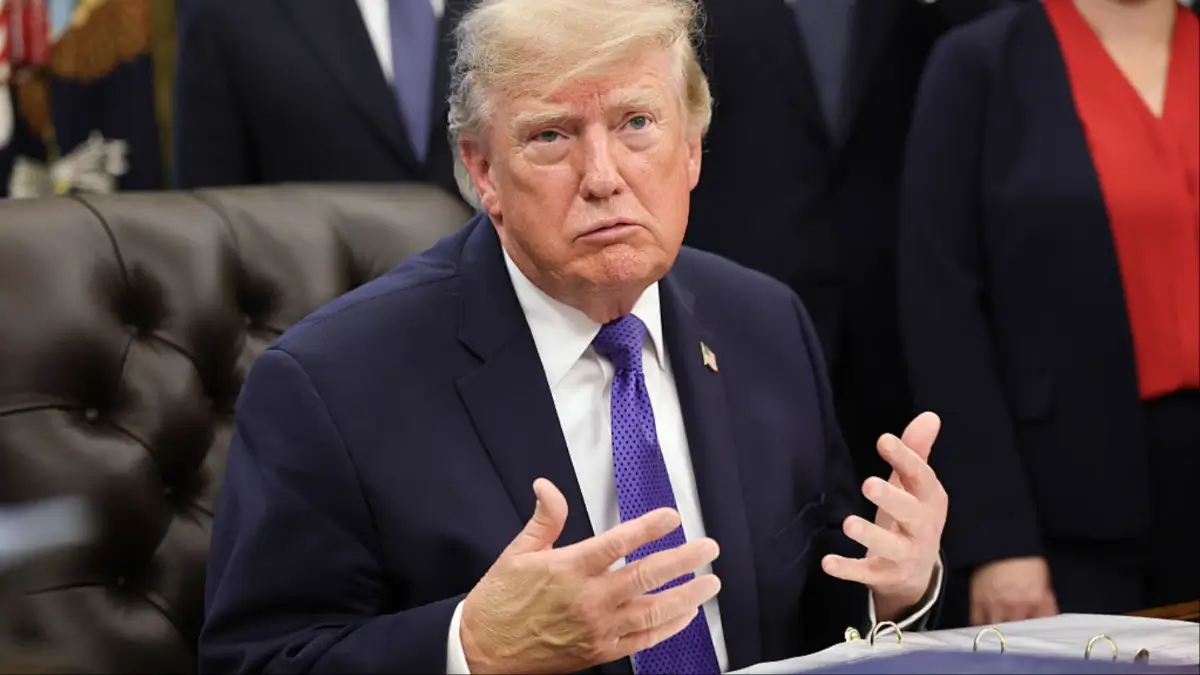
The exchange came as Hariana Veras, an African journalist who reports on the White House, the Senate, the Pentagon and the State Department, discussed the continuing violence in eastern Congo and Rwanda’s involvement in the conflict.
Veras said she had just returned from the Democratic Republic of Congo and had observed that “Rwanda is still killing a great number of Congolese,” prompting Trump to pivot the conversation from the war to Ebola.
In other words, the president didn’t have an answer, so he shifted topics.
‘Nice Work’: Trump’s Rhapsody Over the ‘Made In America’ Initiative Continues — Until a Reporter Puts One Question That Drops His Victory Lap
One observer online replied, “Boy, that’s cold,” after the president interrupted the discussion with an unexpected Ebola reference.
Others interpreted Trump’s remark as what it was.
“Ah, racism on a Monday — what a disrespectful jerk. I can’t wait until he’s gone,” added another commenter.
Another suggested: “The reporter should have shot back, ‘How’s dementia going?’”
And a further observer simply noted: “His mind is fried.”
The exchange began as Veras attempted to describe what she had seen in Congo.
“I just came from the DRC… I witnessed again that Rwanda is still killing a lot of Congolese.”
Trump cut in immediately.
“How is Ebola going?”
Veras answered without taking the bait or abandoning the topic.
“Ebola’s under control,” she said.
The question stood out because the conflict Veras was trying to highlight involves a long-running struggle in eastern Congo that has displaced millions and drawn Rwanda into an increasingly dangerous clash with the Congolese government and armed groups operating in the region.
The DRC has endured decades of conflict tied to its mineral wealth and unresolved grievances stemming from the 1994 Rwandan genocide, according to the Council on Foreign Relations’ Global Conflict Tracker.
Rwanda-backed M23 rebels seized Goma and Bukavu in early 2025 and continue to control substantial territory in eastern Congo despite a U.S.-brokered peace agreement and ongoing Qatar-mediated talks. More than seven million people remain displaced, while Rwandan troops continue operating on the ground and key provisions of the peace agreement remain unimplemented.
The danger extends beyond the battlefield. The conflict could spill into the Great Lakes region, where past wars have inflicted immense civilian suffering.
Congo and Rwanda have repeatedly exchanged accusations of backing armed groups, while Rwanda maintains a sizable military presence near their shared border. Rwanda and Uganda also have economic stakes in Congolese mining, according to the background material provided.
The humanitarian toll is immense. More than seven million people are internally displaced, while millions face acute food insecurity and lack basic medical and security aid. Current World Food Programme data shows that 26.5 million people in the DRC are grappling with acute food insecurity, making it the country most afflicted by this crisis. About 1.1 million Congolese nationals are also refugees in neighboring nations.
Ebola remains a real and serious issue in Congo, which gives Trump’s remark more weight than a mere aside about a disease. Yet the health emergency is separate from the political and military struggle Veras was attempting to highlight.
According to the World Health Organization, the Bundibugyo virus outbreak had extended to two additional health zones as of Sept. 23, bringing the total to 63 affected health zones across seven provinces. The DRC had reported 7,890 confirmed cases and 3,799 deaths, yielding a crude case-fatality ratio of 48.1%.
WHO noted that new cases remained high nationally and warned that ongoing transmission, along with delays in diagnosis and treatment, was fueling preventable illnesses and fatalities.
Bundibugyo virus is one of three pathogens known to trigger large Ebola disease outbreaks, according to WHO. Ebola disease is rare but can be severe and fatal. While licensed vaccines and treatments exist for Ebola virus disease, there are no approved vaccines or targeted therapies for Bundibugyo or Sudan virus diseases. Early intensive supportive care can improve survival.
For Veras, the Congo conflict is a topic she has continued to push publicly. In June, she launched the #PeaceForDRCNow campaign and has described her Africa coverage as a personal mission, according to her verified X account.
“My passion for Africa runs through my blood. It is in my voice, in my work, in my steps, and in my dreams. And until my last breath, I will not stop telling the world that Africa is far more than what appears in the headlines.”
The president’s question came during a White House event centered on the proposed Iowa steel mill, which Mesabi Metallics is expected to bring online by 2030. The facility is projected to produce 10 million tons of steel each year and create as many as 1,750 permanent jobs, while a related Minnesota iron ore mine is slated to yield roughly 7.5 million tons of iron annually.
Trump leveraged the announcement to trumpet his steel tariffs, claiming his 50% duties on foreign steel were drawing investment and manufacturing back to the United States.
“Not long after I took office, I imposed hefty 50% tariffs on all foreign steel, and now our steel industry is roaring back to life,” the president stated. “Everyone is building their plant here because they don’t want to pay tariffs.”