
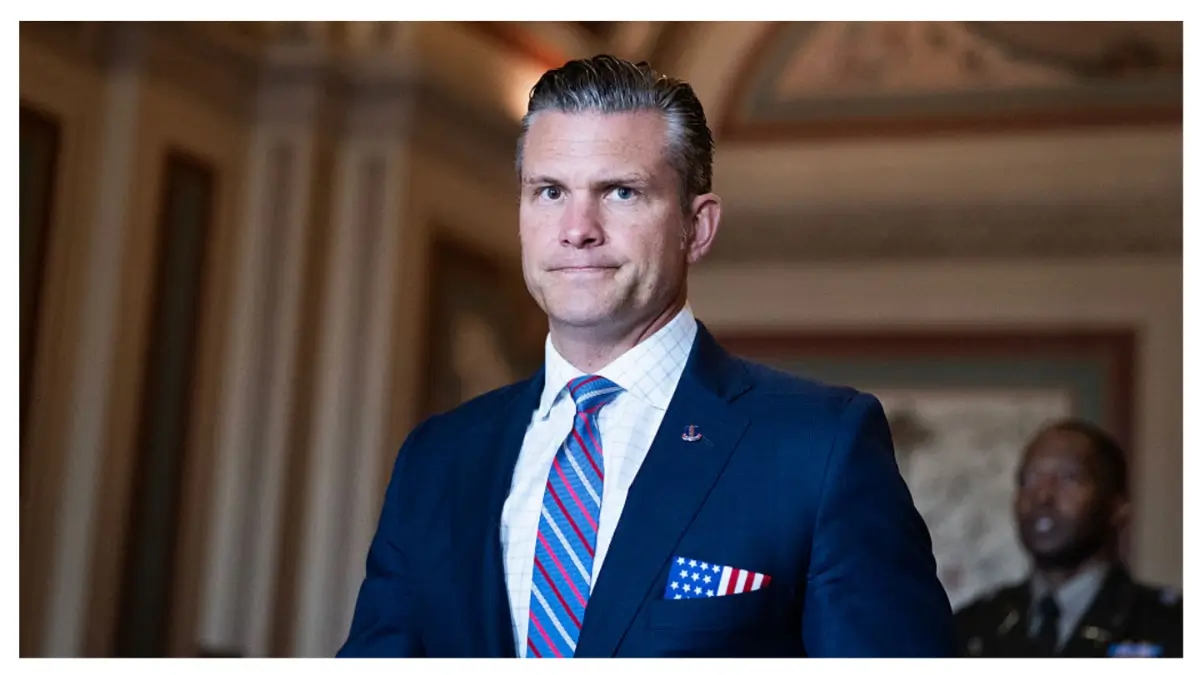
President Donald Trump first endorsed Defense Secretary Pete Hegseth’s plan to televise the execution of the convicted Fort Hood gunman, arguing that the public deserved to witness his death.
But, facing mounting criticism from both Republicans and Democrats and insiders within the administration, Trump is said to be reconsidering, leaving Hegseth to defend a proposal critics liken to public executions carried out by extremist groups and autocratic regimes.
Privately, Trump has signaled that the novel idea of livestreaming the firing-squad execution of former Army Major Nidal Hasan “might not occur,” Axios reported. He is weighing whether airing the scheduled December 3rd sentence would deter future attacks or risk transforming the convicted Fort Hood shooter into a martyr.
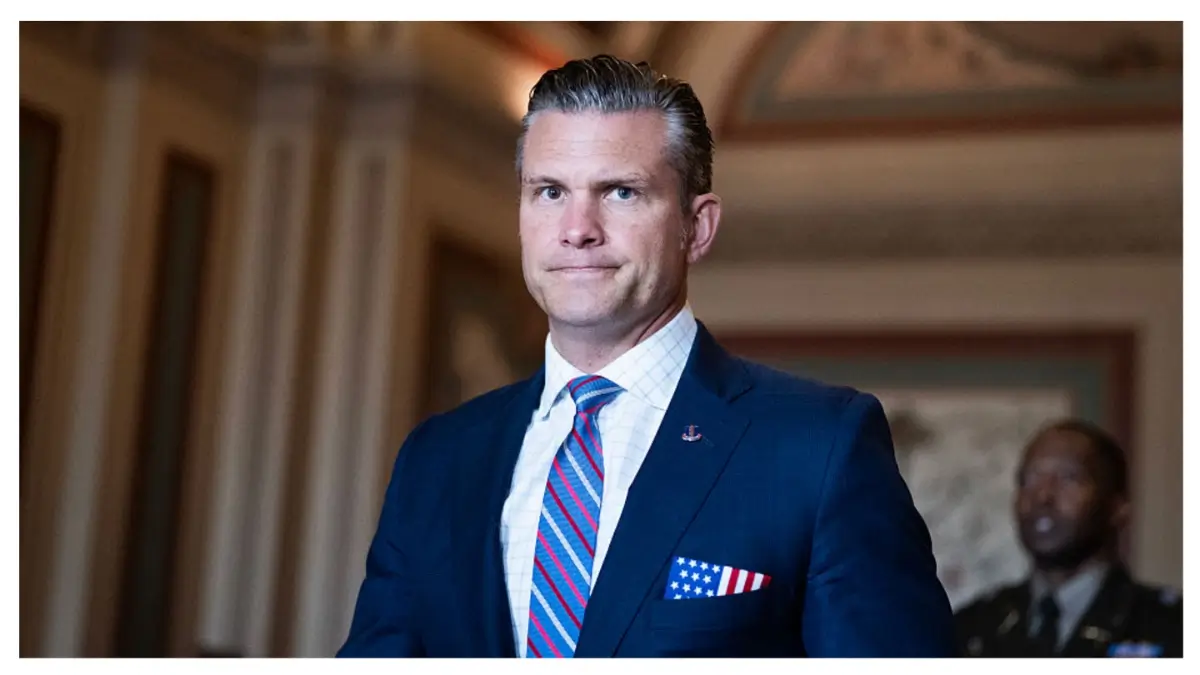
The indicated shift followed Trump’s public endorsement, after which he began to distance himself as opposition grew, placing increasing pressure on Hegseth’s proposal.
The uproar began last week when Hegseth stated Hasan, 56, would be the first person to undergo a U.S. military execution since 1961, with the event possibly viewable online in a live stream.
A military jury found Hasan guilty of killing 13 people and wounding 32 in a 2009 attack at Fort Hood, Texas.
‘Back off from his neck!’: Plainclothes Texas officers cuff a Black man in his own yard as the police chief grasps his throat, video shows
Trump’s own MAGA-affiliated network accidentally grants his critic a live TV platform — then rushes to suppress him, but viewers already saw enough
Hegseth defended the broadcast as a means to illustrate the consequences of such violence.
“And we’ll ensure it’s accessible to the public, so people understand that there are severe consequences for these acts,” he said during an interview on Real America’s Voice.
Trump initially sounded eager about the notion. When asked on Friday if he had personally cleared the livestream, he replied, “Did I approve? Absolutely.”
He also backed the punishment itself, telling a White House audience, “Death penalty by firing squad, and he deserves it.”
Yet his public stance grew more uncertain as the backlash mounted. In a Friday night interview with WSTM-TV in Syracuse, New York, Trump stated, “I wasn’t involved in that decision, but I understand the rationale.”
He added that it might be intended as an example, and he understood that reasoning very well.
By Saturday, he acknowledged that the ultimate decision rested with him alone.
“There are two lines of thinking: to broadcast it or to withhold it. Because by showing it, perhaps others won’t imitate his actions,” he stated. “Ultimately I will decide. I know the military’s preference, but the final call will be mine.”
Axios reported that individuals close to Trump had heard him voice reservations about the plan after receiving pushback from lawmakers and advisers, both inside and outside the White House. A confidant said the president did not sound “particularly enthusiastic” about the proposal.
“That’s why he’s been checking in with people, as he tends to do, asking for opinions.”
The president finds himself torn between seeking punitive justice for Hasan and worries about transforming his death into a public spectacle, the report noted.
“The president wants Hasan to pay for what he did, and a public execution could be that extra humiliation he deserves,” a confidant told Axios. “But he also doesn’t want to turn him into a martyr.”
Another source questioned whether livestreaming would serve any constructive purpose.
“We’re talking about shooting an elderly man in a wheelchair,” the source remarked. “Do we really want to livestream that?”
Hasan was left partly paralyzed and wheelchair-bound after being shot during his arrest. In August 2013, a military panel sentenced him to death after convicting him on 45 counts of premeditated murder and attempted premeditated murder.
The plan has drawn unusually sharp criticism from Republicans who support Hasan’s death sentence but oppose broadcasting his execution, CBS News reported.
Former North Carolina Senator Thom Tillis, who voted to confirm Hegseth, said the controversy had deepened his remorse about that vote.
“Hasan should face the death penalty, but making his execution public and streaming it? Beyond disgusting,” Tillis wrote on X. “Public executions are what oppressive dictatorships like Iran and Afghanistan do. It should not be happening in America.”
Utah Senator John Curtis also urged Hegseth to rethink the plan.
“Seneca warned that Rome’s bloody spectacles corrupted the people who watched them,” Curtis posted on X. “A civilization declines when it cultivates an appetite for executions as a form of entertainment.”
Georgia Representative Austin Scott likewise drew a line between endorsing the sentence and broadcasting the act itself.
“I fully support the death sentence, but livestreaming executions is what jihadists do. America should be better than that,” Scott wrote on X.
Democrats were equally forceful in their critique. Senator Chris Murphy of Connecticut condemned the proposal during an appearance on CNN.
“That’s disgusting. What, is he mimicking ISIS executions?” Murphy said.
Vice President JD Vance has also distanced himself from the broadcast without challenging Hasan’s punishment.
“Whatever the controversy is about the method of the execution, I hope that people don’t forget that this is a guy who brutally murdered a lot of innocent people,” Vance told reporters Friday.
“Now that said, I mean, look, if it’s all through livestream, I’m not going to be watching it.”
House Speaker Mike Johnson likewise indicated that the proposal lacked unanimous Republican support.
“I wouldn’t be watching it if it was aired,” Johnson told CBS News.
“I need to tell the White House what some of my colleagues think about that, and not everybody’s in favor of the idea,” he added.
An unnamed administration official told Axios the president was unlikely to authorize the broadcast.
“If I had to bet, I would bet the president doesn’t authorize this.”
The official added: “Hasan will be executed for his crimes…and that’s what matters.”