
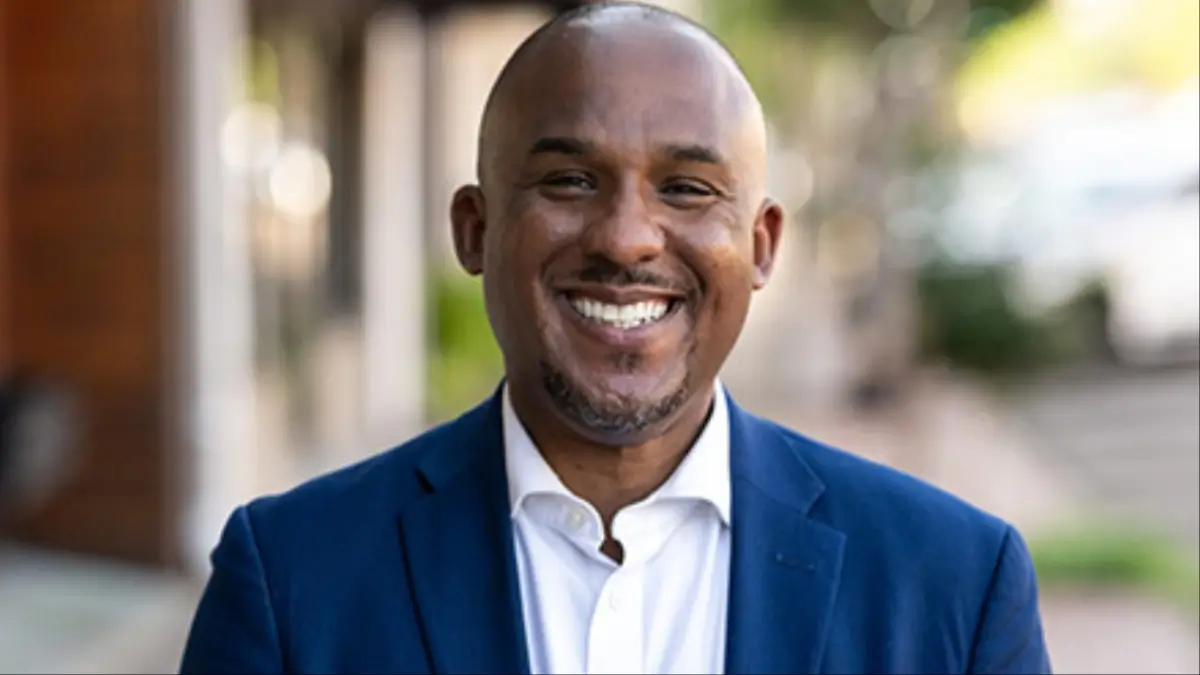
Following more than a week of ensuring every lawful ballot was counted, Democrat Scott Colom can now proclaim himself Mississippi’s U.S. senator.
The district attorney for Mississippi’s 16th Judicial District defeated incumbent Sen. Cindy Hyde-Smith (R) by nearly 4,700 votes, according to The Associated Press.
Colom will become Mississippi’s first Black U.S. senator since Blanche Bruce, who served from 1875 to 1881 during and just after the Reconstruction era. He will also be the first Democrat in the seat since 1989, following in the footsteps of John Stennis.

The nail-biting contest hinged on counties’ verification of affidavit ballots, provisional votes cast by individuals whose eligibility could not be immediately confirmed at the polls. The process is frequently prompted by issues such as lacking an acceptable photo ID or not appearing on the voter rolls.
Mississippi election officials also had five business days to receive and count absentee mail-in ballots, provided voters postmarked them by Election Day.
Colom consistently felt confident that he would be heading to Washington as the state’s next senator.
“Where we are, where the ballots stand, we’re going to win,” Colom told supporters the day after the election. “This is our election. We’ve won it. The people have spoken. They’ve chosen a new direction. I’m confident of that.”
Hyd-Smith, meanwhile, had been largely silent about the results until reporters caught up with her at the U.S. Capitol on Tuesday.
“We are still counting votes and there are a few thousand left, and we feel confident,” she said.
Colom offered a different perspective, suggesting Hyde-Smith was reluctant to acknowledge the possibility of losing her seat.
“At some point we have to put the people of Mississippi above our personal feelings and partisan politics,” he said.
Final results show that Colom secured his seat by flipping at least 18 counties that had previously backed Donald Trump. This includes Forrest County, a region named after Nathan Bedford Forrest, a founder of the Ku Klux Klan.
Many attribute Colom’s victory to unconventional advertising and strong turnout among younger voters. His campaign emphasized economic policy, and he presented himself as a moderate, enabling him to attract support even in areas that had historically leaned Republican.
Despite the narrow margin, there is no automatic runoff. Mississippi’s election handbook and state law do not provide a mechanism to challenge the results of a U.S. Senate general election.
However, Secretary of State Michael Watson noted that candidates may review ballot materials after certification to search for irregularities.
It appears Hyde-Smith will not pursue that option. In a video statement posted on X, she conceded the race.
“While this outcome isn’t the one we worked for or hoped for, I respect the will of Mississippi voters. I want to congratulate Scott Colom and wish him success as he assumes the substantial responsibility of representing our great state.”