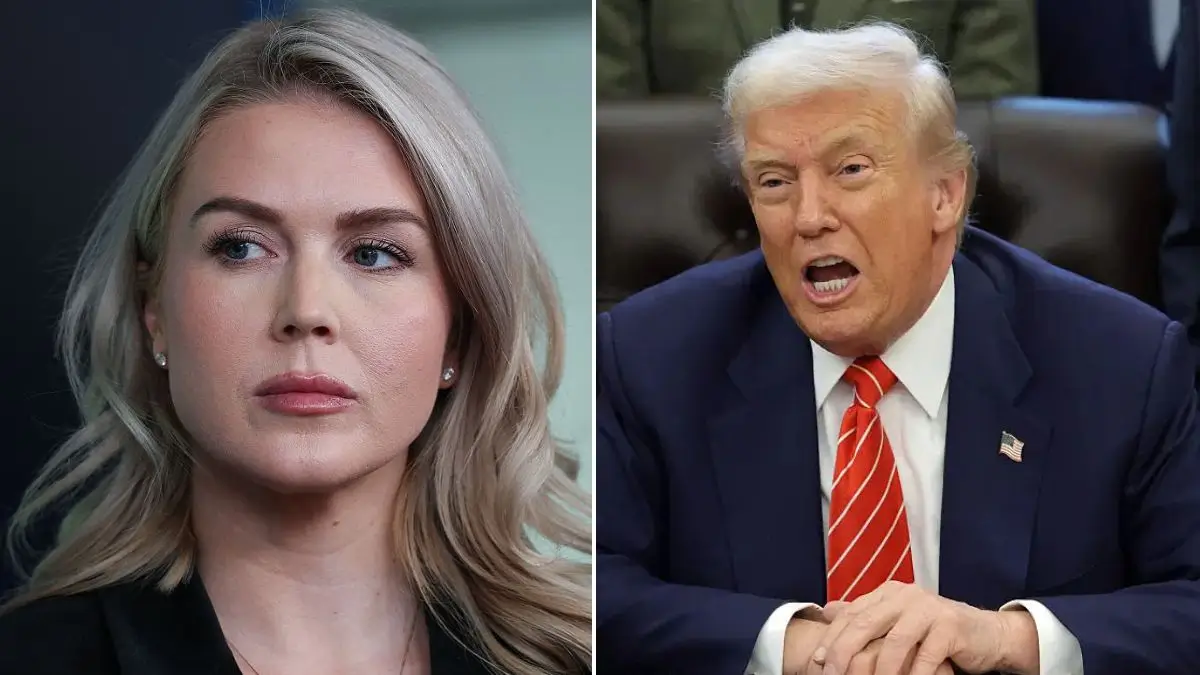
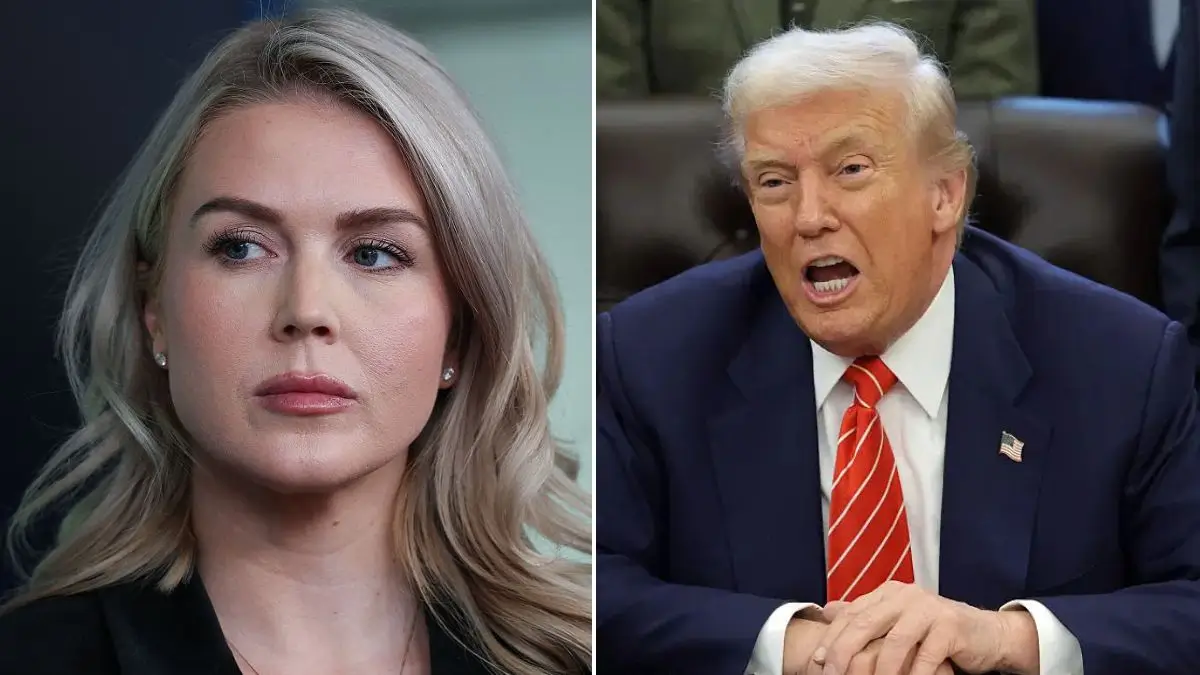
Former White House Press Secretary Karoline Leavitt has dragged President Donald Trump and his team into potential legal trouble.
Her sharp critique of big law and its alleged “lies” is now returning to haunt Trump and his White House.
A judge ordered a search of the Trump administration’s servers as part of a lawsuit filed by the American Bar Association (ABA) over the president’s alleged retaliatory campaign against prominent U.S. law firms.
As part of that campaign, Leavitt asserted in April 2025 that Trump was holding “big law accountable for its ‘lies,’” according to The Wall Street Journal.
On Monday, U.S. District Judge Amir Ali ordered Trump to disclose any documents, emails, or memos related to Leavitt’s comments or, at the least, to assert executive privilege, Raw Story reported.
“President Trump’s policy team is carrying out his directive to hold Big Law responsible for weaponizing justice and for their lies, and the strategy has shown considerable success,” a Trump loyalist told the WSJ.
Shortly after Trump returned to office in January 2025, he issued a sequence of executive orders and related memos aimed at major U.S. law firms. Critics argue the measures targeted the firms’ political ties, past investigations, prior representations, and DEI (diversity, equity, and inclusion) policies.
Legal experts characterized the campaign as “an unprecedented use of executive power against private legal practices.” It also created a rift between firms that opted to settle and those that pursued litigation.
Nine law firms agreed to provide $940 million in pro bono services after the president issued the executive orders.
Then, in June of the previous year, the ABA filed a lawsuit accusing Trump of pursuing a campaign of retribution, incorporating Leavitt’s own words into the factual allegations.
“Big Law continues to bend the knee to President Trump because they know they were wrong,” she said in a statement last April, the ABA noted in its filing.
The judge’s order stated that White House documents “may shed light on the government’s motivation” and that memos “could establish the existence of a policy of intimidation.”
The administration has denied that it carried out any intimidation campaign against the law firms.
The judge narrowed the White House email search to communications between February 13 and April 18, 2025, the period in which Trump signed five executive orders targeting law firms, Raw Story reported.
Among the penalties imposed by Trump’s orders were suspensions or reviews of active national security clearances held by the firms or their attorneys. The orders also restricted or barred attorneys’ access to federal buildings, to government employment, to contact with government officials, and even to conducting any business with the administration.
Additionally, the orders directed federal agencies to review or terminate contracts and to bar federal contractors from engaging with the firms singled out by Trump.
Since the ABA filed suit, federal courts have blocked several core provisions of the orders on constitutional grounds.
By March of this year, the Department of Justice began the process of dropping appeals on the rulings, signaling a willingness to comply with the orders and lift sanctions against the firms that fought back. However, the agency abruptly reversed course, choosing to challenge the rulings again.
Trump’s actions have ignited a broader legal debate. NPR reported that scholars and bar groups warned that Trump’s vendetta against law firms he disfavors could hinder representation for clients on his list.
There are also uncertainties about whether Trump’s orders are legally enforceable and whether the settlement agreements signed by the nine firms are lawful.