
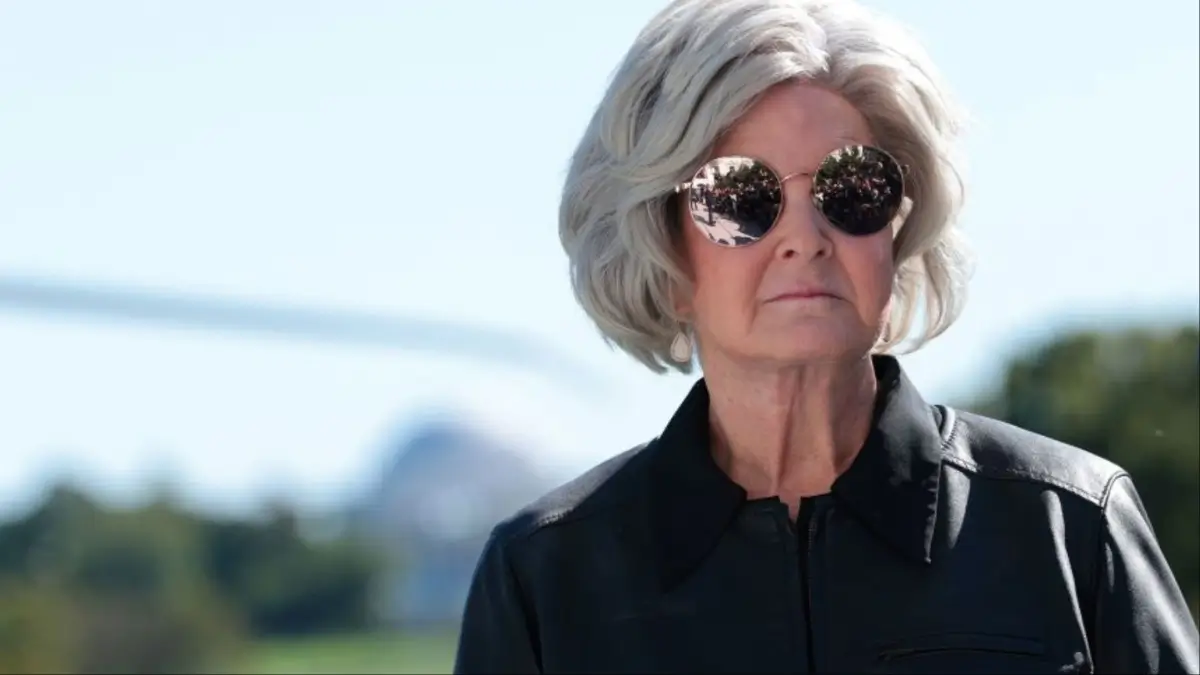
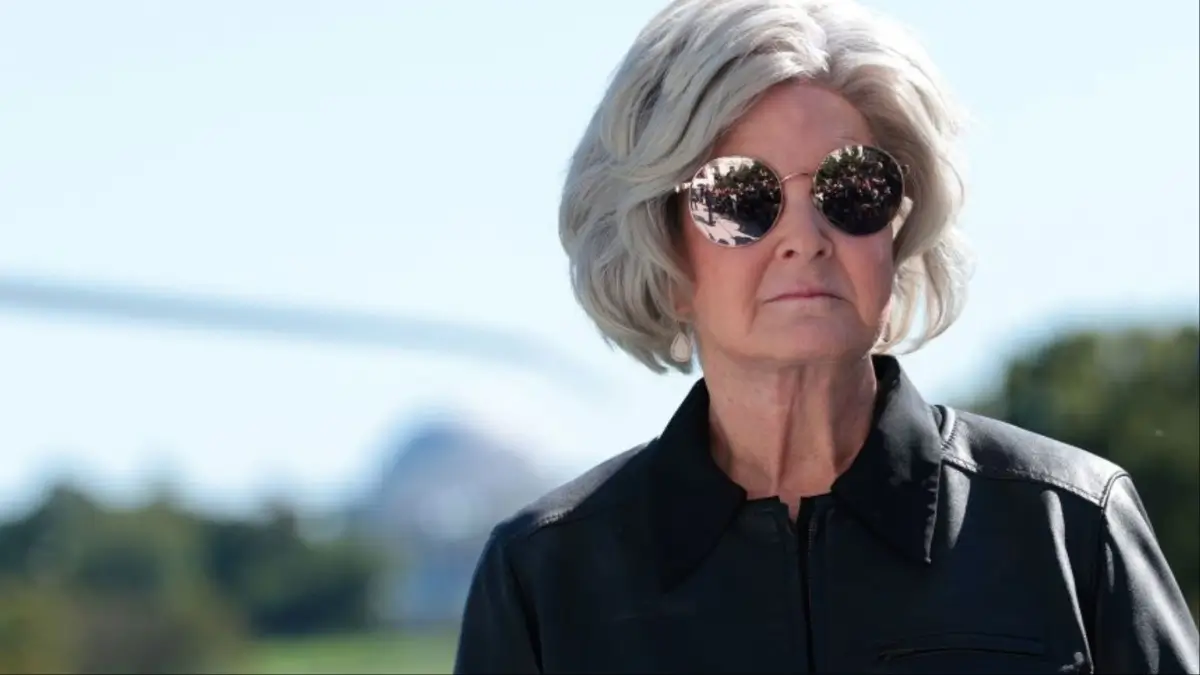
Susie Wiles continued showing up at the White House while battling breast cancer, determined to keep her role as one of President Donald Trump’s most trusted advisers.
Yet a fresh account from a veteran journalist suggests her health struggle might have signaled the start of the end for that bond, as Trump allegedly grew more hostile toward the aide who helped him regain the presidency.
Maggie Haberman of The New York Times says Trump began “picking on” Wiles after she announced an early-stage breast cancer diagnosis in March, reportedly interpreting her illness as a sign of weakness.
The disclosure provides a different lens on how their relationship soured, culminating in Wiles stepping down as chief of staff after Republicans suffered a stinging midterm defeat and Trump’s anger over the results reportedly boiled over.
Haberman discussed Wiles’ departure Monday on Jessica Tarlov’s “Raging Moderates” podcast. Tarlov asked whether the controversy surrounding Wiles’ daughter, Katie, who faced accusations of “trading influence” through her role at lobbying firm Continental Strategy, had contributed to the split.
Haberman said the situation was more intricate, describing a familiar pattern in Trump’s handling of senior aides.
“There were many reasons behind her departure,” Haberman stated. “The central idea is that everyone operates on Trump’s own schedule for how long they’ll stay. The hourglass runs, and the sands begin to fall—it’s literally true for everyone. And then they may reappear in some form.”
Yet Haberman emphasized Wiles’ cancer diagnosis as a pivotal turning point, noting people close to the White House observed Trump’s demeanor toward her shifting around that time.
“Susie stood by Trump during his nadir in 2021. She stood with him at a personal low point when he and Ron DeSantis clashed after she had helped steer the latter’s campaign toward its late stage, and they parted over money-related issues,” Haberman said.
She then explained how Wiles’ illness affected her ability to sustain a steady presence at the White House and how Trump reportedly reacted.
“When Susie Wiles fell ill — she has been fighting cancer since February — she publicly stated she was cancer-free. I don’t know more about her current condition. Some people privately suggested to us that the chaos began to become more evident around the time of her diagnosis, even if it was already there—the chaos became more visible and a return to Trump’s harsher tendencies. She wasn’t physically as present; she tried to keep working through it. People recognized she wasn’t there, and Trump dislikes illness. He views it as weakness. So he started targeting her.”
Haberman also noted that Wiles wasn’t the only person whose overlapping duties and external affiliations created friction within the White House. Some aides wore multiple hats, serving as special government employees while maintaining ties to lobbying firms. Wiles’ daughter became part of that controversy, adding another source of strain.
“So, this was always likely to end badly this way,” Haberman added. “But it’s true that Susie Wiles…she approaches politics in a transactional way that Stephen Miller simply does not.”
Wiles announced her breast cancer diagnosis in March, and Trump publicly confirmed the news. Despite undergoing treatment, she kept serving as chief of staff, even taking a rare trip to Capitol Hill in July to meet privately with Republican senators as the administration sought to break a stalemate over Trump’s SAVE America Act.
In September, Wiles disclosed that she was cancer-free following treatment for early-stage breast cancer. She said pathology results came back after a Mayo Clinic visit and thanked her family, doctors, and supporters for helping her through the ordeal.
At that time, Wiles publicly praised Trump for his support. Yet Haberman’s account implies the relationship had been deteriorating months earlier, according to reports.
“Thank you to my family, friends, doctors, and everyone who prayed for me, checked in, and supported me along the way,” she said. “A special thank you to President Trump for his unwavering support. I am deeply grateful and will continue to work to advance his America First Agenda.”
The final rupture occurred after Republicans endured substantial losses in the November midterms, giving Democrats control of both chambers. Trump reportedly vented his fury toward Wiles and directed much of his anger at her, per CNN. Wiles submitted her resignation on Thursday evening, and Trump announced Friday that Stephen Miller would take over as chief of staff.
Wiles said Friday would be her last day in the post, describing the experience as “the honor of a lifetime.” Trump indicated she would transition to his political operation, though the exact role remained unclear.
Miller’s ascent signaled a major reordering of the administration’s leadership. A veteran MAGA loyalist, he has been a key architect of Trump’s immigration crackdown and other defining policy moves.