Dionne Warwick: Truth, Legacy, and Why She’s Still That Girl at 85
April 17, 2026
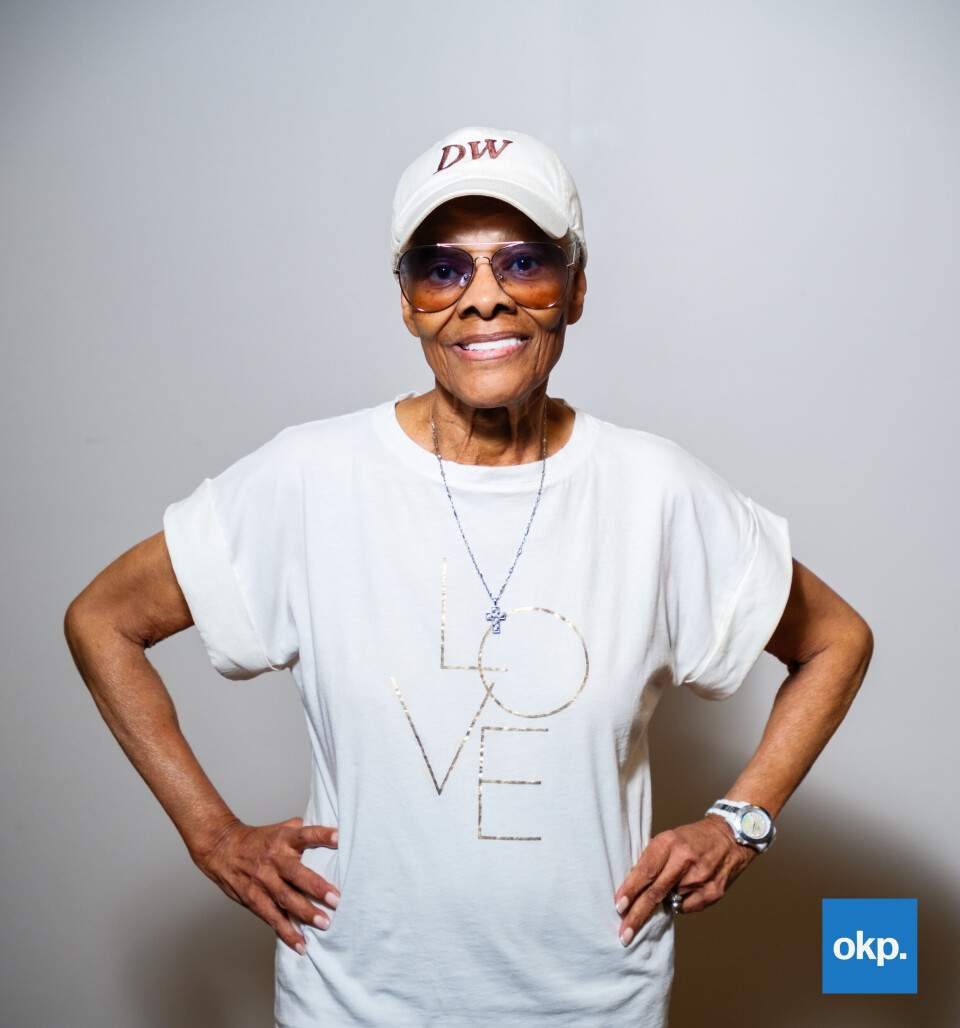
Photo by Creator Trigger for Okayplayer.
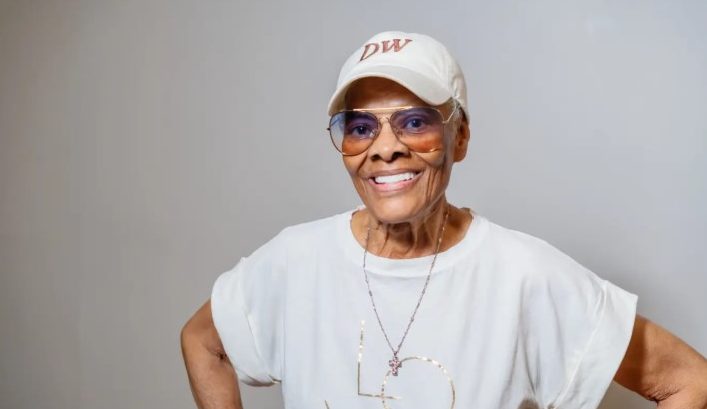
On a sunlit afternoon in late March, a black SUV rolled up to the Okayplayer offices a touch sooner than expected. The driver stepped out, opened the back door, and there sat Ms. Dionne Warwick, unruffled, poised, and ready to tackle the day ahead.
She doesn’t require assistance stepping out, yet she kindly notes that she isn’t moving as swiftly as she once did. By the time she steps into the building, she’s already soaking in the moment—greeting everyone with a smile, offering a hug, and radiating a mood that fills the room without any extra effort.
Across from Dionne Warwick, the first thing you notice isn’t the imprint of her career but the force of her presence.
She’s warm, perceptive, and fully engaged. She evokes that nurturing grandmother who has a wealth of wisdom to share because she’s lived long enough to accumulate it. She asks questions, expects honest answers, and doesn’t feel compelled to soften her stance to spare anyone’s feelings. And after sixty-six years in the R&B and soul arena, she’s earned that right. Truthfully, she’s likely always carried this timbre, and it’s a cornerstone of the longevity she’s enjoyed.
Love MadameNoire? Get more! Join the MadameNoire Newsletter
We care about your data. See our privacy policy.
That same energy has carried her across generations of R&B and soul—the kind that doesn’t bend to what’s trendy or expected. You can hear it in her music, feel it in her aura, and now witness it on Twitter, where her wit and candor have introduced her to an entirely new audience.
For someone who helped shape the genre, there’s a quiet confidence in how she moves. The 85-year-old icon from East Orange, New Jersey, isn’t chasing after the latest thing, but she’s keenly aware of what she represents—especially after navigating an industry that hasn’t always granted space for such authority, voice, or staying power. It shows up in how she speaks about today’s artists, particularly younger women, with both admiration for how they’ve claimed control of their careers and a clear sense of what she believes is still missing.
She doesn’t devote much time to today’s music, often preferring the work of her peers, but she pays attention to how this generation operates. Especially the way Black women are expanding beyond the music and leaving their own mark.
At a moment when women in music are redefining ownership, visibility, and longevity, Ms. Dionne—a name she graciously allowed us to use—stands at the center of that conversation. Not merely as a reflection of what’s been done, but as a benchmark for what enduring, evolving, and staying true to oneself can look like.
Now, as she prepares to release DWuets this summer—a project written entirely by Diane Warren and featuring artists like Cynthia Erivo, John Legend and Kehlani—she’s focused on joy. The people, the music, and the chance to connect across generations one more time.
Because what she’s truly looking forward to isn’t just the work, but the life after it. Being at home. Sleeping in her own bed. Cooking her meals her way. Spending time in Brazil, which she calls her second home. Playing cards and pinochle with friends. Going to the movies.
In other words, just being normal.
And whatever comes next, God is her GPS.
But before Ms. Dionne gets there, she’s fully present in the moment she’s in now.
Okayplayer: After over six decades in music, what stands out to you most about R&B today?
Dionne Warwick: I’ll admit I don’t spend a lot of time with the current genres. To me, today’s music seems aimed at a much younger audience, which keeps me rooted in my era and in the work of those who recorded during that time.
What do you feel has changed the most in how artists express themselves today?
Well, the sound has evolved in a dramatic way, obviously coming from a much younger sensibility. And when I say I’m listening to my peers, I’m listening to those who created some of the most extraordinary music in my view. Some of today’s lyrics, though, aren’t always easy for me to hear. I believe there’s a great deal for the younger generation to learn from yesterday. They often hear themselves described as “old-school.” And I reply that yes, I am old school—but there had to be an old school before there could be a new one. So there’s still a lot to learn. Everything that’s said can be expressed in another, more palatable way. There’s always another way to convey a message.
When I first ventured onto the internet, it flipped the dynamic in a delightful way. It allowed me to laugh with people and enjoy the exchange. There’s always an alternative route to articulate whatever you have to say without going overboard. That’s exactly what I perceive most of today’s artists attempting to do. Sometimes they go a little too far.
What do you enjoy most about connecting with people on X (formerly Twitter)?
Oh, the questions I get. As I mentioned at the outset, I intend to ask plenty of questions and expect honest responses in return. You can ask me anything, and I’ll answer. That’s essentially how we communicate. Whenever I’m on Twitter, I like to tease a little, share a grin, and remind everyone that a conversation should always end with a smile.
Do you feel like women today truly have more ownership and control in the industry?
I think it’s wonderful that women are declaring who they are and are being accepted for it. Watching the younger generation take charge of themselves and thrive on their own is a joy. I’m certain the up-and-coming female artists are learning by observing and talking with peers who are brilliantly succeeding. Nothing could make me happier.
What excites you most about this new generation of artists?
What excites me most is their immediate willingness to join this project. When asked, they respond with an unequivocal “Yes.” That signals they know who I am and what I’ve accomplished, and that knowledge excites me deeply.
If one woman artist could reimagine your work, who would you choose and why?
Nobody. There’s only one Dionne Warwick. I’ve always believed that anyone who aspires to be a recording artist should be themselves, whatever that unique self may be. So I wouldn’t expect anyone to attempt what I’ve done unless they make it their own, which some already have. Luther Vandross, for example, has tackled several of my songs, turning each into a Luther Vandross moment that fills me with joy. I adore what Aretha Franklin did with “I Say a Little Prayer” as well. When you borrow someone’s work, you must ensure you don’t imitate them—bring your own voice to the song, and that’s how you reclaim it.
What continues to drive you creatively at this point in your career?
I wake up every morning with a reason to keep going. I’ve always asked, “What’s next?” My answer remains the same: whatever God has planned for me. I walk the path laid out before me, and I won’t know what else to do until He points me that way, and then I move forward with purpose.
Why did this feel like the right moment to work with Diane Warren and release DWuets?
After six-plus decades on the road and in studios, I feel I’ve given a great deal of myself to Dionne. It’s time for Dionne to allow herself a little indulgence and moments of rest. The nonstop pace of touring isn’t the easiest road to travel, especially for a woman. It doesn’t mean I wouldn’t consider something wonderful if it came along and the terms were right. But for now I feel I’ve done what I was meant to do.
I’m preparing for one world tour at this point. We’re aiming to wrap that phase and say, “Bye for now.” Then I intend to take time for myself and pursue whatever comes to mind. I’d love nothing more than to sleep in my own soft bed, prepare my meals the way I like, return to Brazil and spend time with my friends there, and enjoy what I call my second home. I want to play cards and pinochle with friends, go to the cinema, and simply live a normal life again.
What do you look for in artists you collaborate with today, and is there anything you can share about who’s on the project?
You should know I’ve recorded with some of the crème de la crème of both yesterday and today. When I encounter artists who are frank and eager to participate, who also convey sincere appreciation, it’s a gift. When I approached Cynthia Erivo, it was a no-brainer—an immediate yes. My next single will be with John Legend, and everyone knows he’s one of my cherished collaborators as well. It’s striking how many of today’s stars are successfully steering their own paths, and yet they still pause to say yes. That kind of response makes my heart flutter in a good way.
How involved are you in shaping your story for the biopic with Teyana Taylor?
I don’t feel obliged to micromanage the portrayal. Anyone who knows me already understands the kind of person I am. And Teyana Taylor is clearly determined to capture every nuance I think should be included. I feel like Teyana is my alter ego—she’s fearless and unscripted, and I want to know what a filter is because I don’t think I have one. My grandfather, a minister, was among the wisest men I’ve known—second only to Jesus, perhaps. He once told me, “Why tell a lie when the truth is available?” I’ve carried that with me. And all my friends will tell you: if you have a question for Dionne, you’ll get the truth. I cherish honesty above all else, and I see no point in lying. What would be the point?
What do you feel you’re stepping into next? I haven’t given it much thought. Like I’ve said, I don’t know what He or She has in store for me. When the moment comes and they say, “Step to the right,” that’s what I’ll do. I’ll take that step, and from there, who knows what comes next. I don’t know what I’ll do after that, but I’m ready to follow the path laid out for me.
Danielle Brooks
I am a staff writer at New York Beacon, where I focus on culture, entrepreneurship, and the emerging voices redefining Black America. My work highlights innovators, artists, and founders whose stories often unfold beyond mainstream headlines but shape communities in meaningful ways. Through precise reporting and thoughtful storytelling, I aim to document progress, challenge narratives, and contribute to a stronger Black press tradition.