
President Donald Trump has spent months dodging one political blaze after another, balancing a confrontation with Iran, pushback from within his own party, and a mounting pile of scrutiny tied to the Epstein files.
But as more than three million pages of documents began to spill into the public sphere, another problem for the president came into sharper focus: how far his own team allegedly went behind the scenes to keep the records from being released in the first place.

While Trump and his allies hoped the massive document dump might finally put the scandal to rest, a scathing new report suggests the opposite — revealing what Rep. Thomas Massie says was a frantic effort by the White House and Trump’s orbit to sabotage his push to force the files into the open.
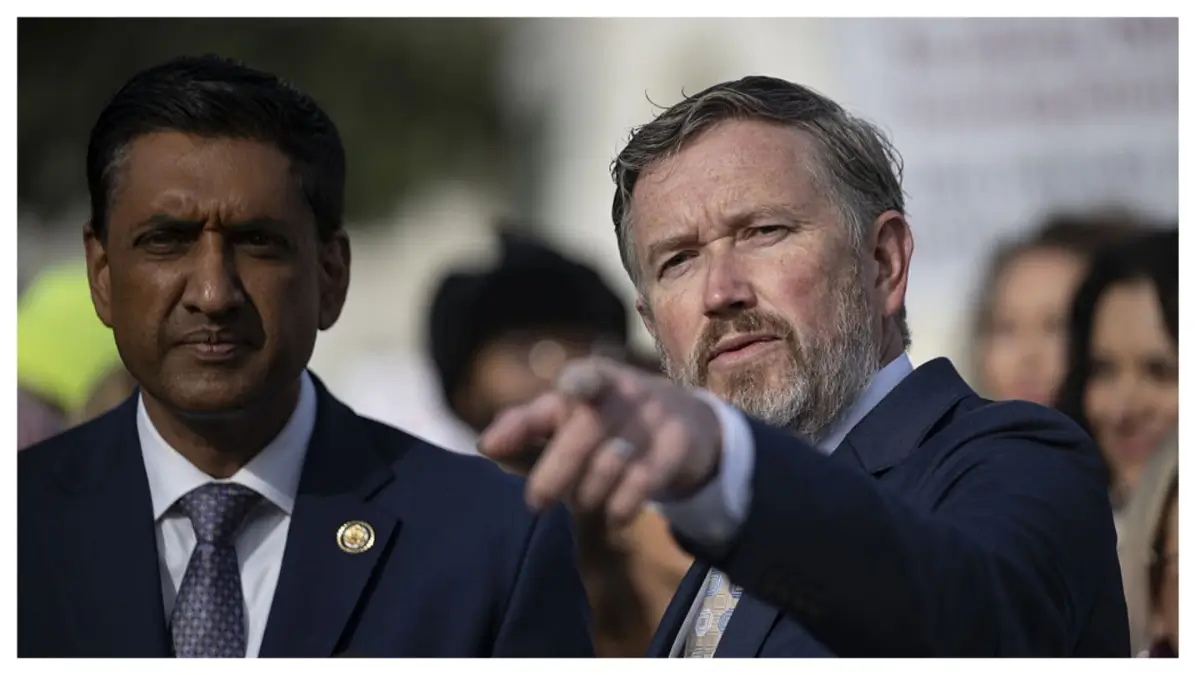
In a report published by The Atlantic, the extent of the scheme to block Massie along with Democratic Rep. Ro Khanna of California from pushing the Epstein Files Transparency Act blows out into the open.
‘It’s Getting Bad!’: Trump Tries to Pretend Nothing’s Wrong — Then Brutal Side-by-Side Photos Drop and the White House’s Clumsy Spin Only Makes the Internet Look Harder
Massie described it as a “360-pressure campaign” while lawmakers told the magazine the effort was “unprecedented in its intensity and scope.”
Just two weeks before the House was set to vote on the measure, key staff members were “suddenly offered more prestigious jobs in the Trump administration or more lucrative jobs in the private sector.”
One of Massie’s employees received an offer that would have doubled his salary.
“Did it ever occur to you that they might be offering you this job to basically make me less effective?” Massie remembered asking his employee. Massie said the staffer turned down the job and commented, “That’s what my mom said.”
View on Threads
“If American lives are to be risked and American blood is to be shed, that decision must be debated and voted on by the representatives of the American people,” Massie said Wednesday.
“And that debate is meant to be arduous. And that vote is meant to be hard.”
Massie also suggested some of his colleagues were eager to avoid taking a public position on the issue.
“I have a theory,” he said. “I think my colleagues don’t want to go on record because we have a terrible track record of meddling in the Middle East.”
While the measure ultimately failed, Massie’s message to the president was unmistakable: the Epstein fight, and the pressure campaign surrounding it, is not going away anytime soon.
He lit the fuse again with a blunt one-sentence PSA on social media aimed squarely at Trump without naming him.
The message was short, brutal and impossible to misinterpret: “PSA: Bombing a country on the other side of the globe won’t make the Epstein files go away, any more than the Dow going above 50,000 will.”
Massie’s post quickly went viral with almost 5 million views, 283,000 likes, and 49,000 reposts.
MSN readers were blunt in their assessment of Massie’s claims about Trump and starting a war with Iran over the files.
“Isn’t it painfully obvious that whenever the Epstein file investigation gets closer to Trump that he creates a diversion? Venezuela, killings of Americans by his ICE squad, Greenland, Iran, WWIII? At what price will he not have others pay to protect his own skin?” DandJ S remarked.
Reader Felix Wells added, “Everything is about deflection. Either away from the Epstein Files, or to keep the populace occupied as he slowly dismantles the workings of the government.”
Massie’s feud with the White House has also spilled into the debate over the escalating conflict with Iran.
By a vote of 219-212, the House on Thursday rejected a war powers resolution on Iran that Massie had co-sponsored.
During hours of debate the day before, the Kentucky Republican argued that Congress — not the president alone — should decide whether the United States enters another war.
View on Threads
“If American lives are to be risked and American blood is to be shed, that decision must be debated and voted on by the representatives of the American people,” Massie said Wednesday.
“And that debate is meant to be arduous. And that vote is meant to be hard.”
Massie also suggested some of his colleagues were eager to avoid taking a public position on the issue.
“I have a theory,” he said. “I think my colleagues don’t want to go on record because we have a terrible track record of meddling in the Middle East.”
While the measure ultimately failed, Massie’s message to the president was unmistakable: the Epstein fight, and the pressure campaign surrounding it, is not going away anytime soon.
He lit the fuse again with a blunt one-sentence PSA on social media aimed squarely at Trump without naming him.
The message was short, brutal and impossible to misinterpret: “PSA: Bombing a country on the other side of the globe won’t make the Epstein files go away, any more than the Dow going above 50,000 will.”
Massie’s post quickly went viral with almost 5 million views, 283,000 likes, and 49,000 reposts.
MSN readers were blunt in their assessment of Massie’s claims about Trump and starting a war with Iran over the files.
“Isn’t it painfully obvious that whenever the Epstein file investigation gets closer to Trump that he creates a diversion? Venezuela, killings of Americans by his ICE squad, Greenland, Iran, WWIII? At what price will he not have others pay to protect his own skin?” DandJ S remarked.
Reader Felix Wells added, “Everything is about deflection. Either away from the Epstein Files, or to keep the populace occupied as he slowly dismantles the workings of the government.”
Massie’s feud with the White House has also spilled into the debate over the escalating conflict with Iran.
By a vote of 219-212, the House on Thursday rejected a war powers resolution on Iran that Massie had co-sponsored.
During hours of debate the day before, the Kentucky Republican argued that Congress — not the president alone — should decide whether the United States enters another war.
View on Threads
“It’s up to Congress to decide whether the United States should go to war, not the president alone,” Massie stated in a Wednesday remark.
“And that debate should be tough, and that vote should reflect that difficulty.”
Massie also suggested some colleagues were reluctant to publicly take a stance on the issue.
“I have a theory,” he added. “I think my colleagues don’t want to go on record because we have a terrible track record of meddling in the Middle East.”
Although the measure did not prevail, Massie’s warning to the president was clear: the Epstein confrontation, and the pressure campaign surrounding it, isn’t going away any time soon.
Massie’s confrontation with the White House has now spilled into the broader debate over the Iran crisis.
As a result of the overall dispute, the House voted 219-212 to reject the war powers resolution that Massie had helped sponsor.
In his remarks the day before, the Kentucky Republican argued that Congress — not the executive — should determine whether the United States enters another conflict in the region.