
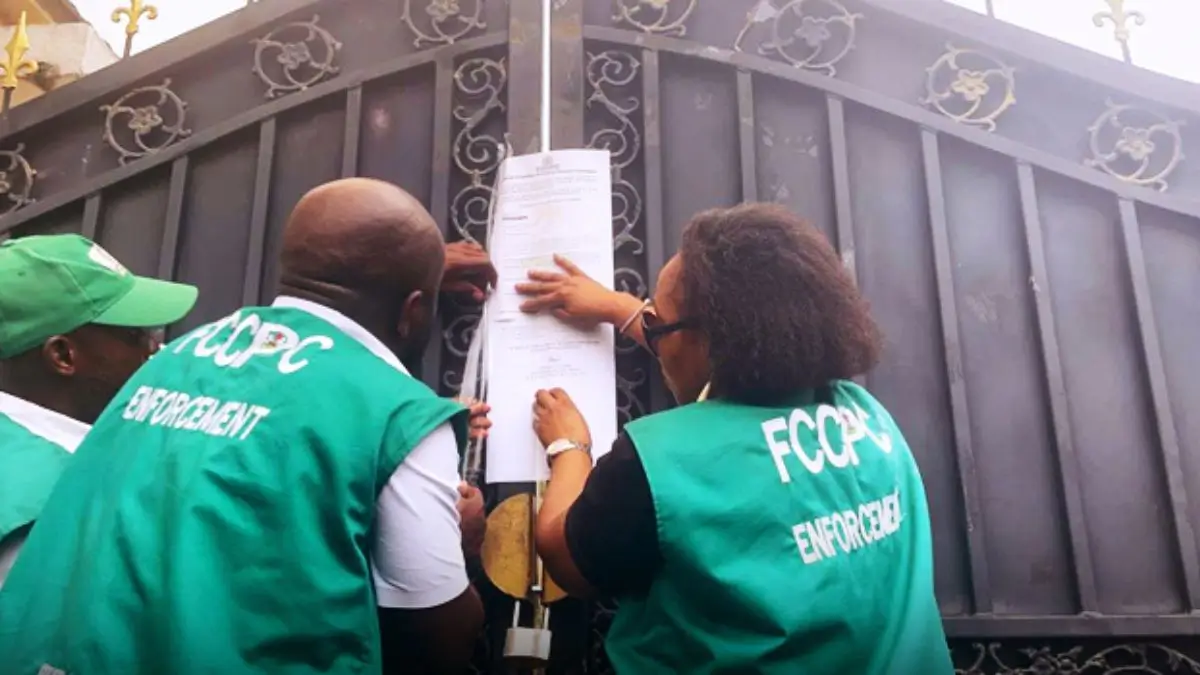
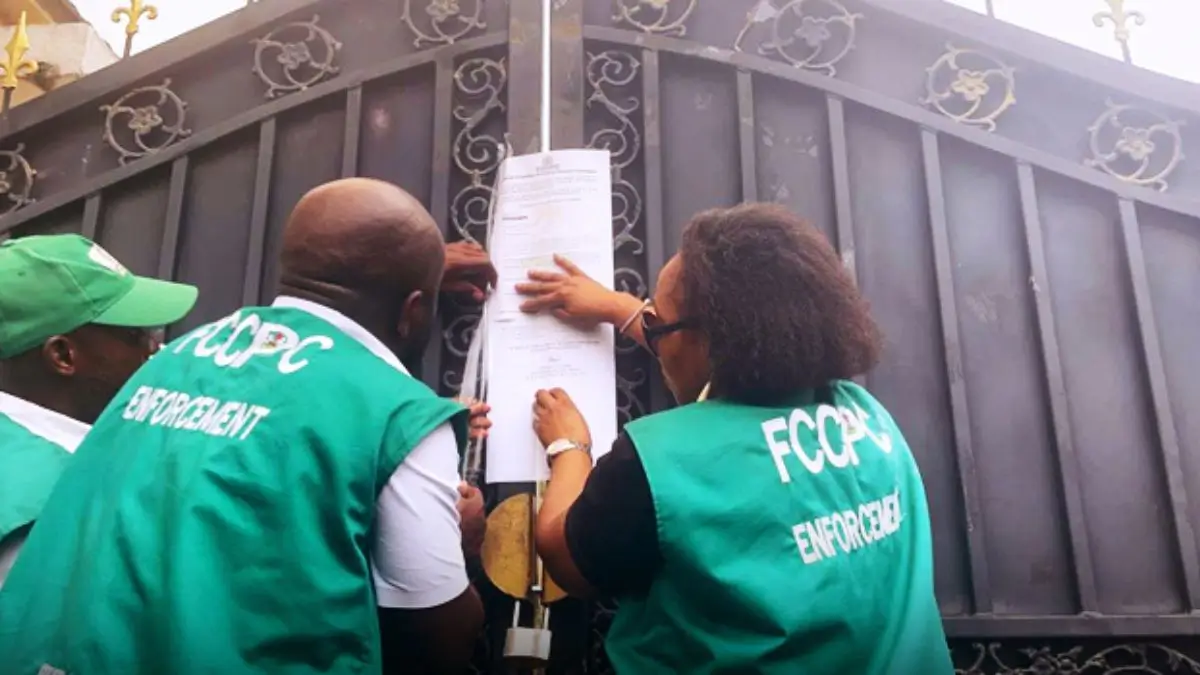
A federal agency has closed a Chinese-run supermarket in Nigeria’s capital, Abuja, after the business barred Nigerians from entering or shopping on its premises.
Over the weekend, clips circulating on social media showed several Nigerians asserting that entry had been refused at a Chinese supermarket located within the China General Chamber of Commerce complex. According to the management, the establishment only permits Chinese citizens to patronize the shop and dine at the facilities.
A reporter for The PunchNG, a Nigerian media outlet, verified the admission policy during an on-site visit. Security personnel told the journalist that the rule had been in force since the start of the year. While the exact rationale behind the directive remains unclear, the guard stated that individuals not of Chinese descent were prevented from passing the gate into the complex that houses the market.
A facility manager indicated that Nigerians who reside within the complex still had access to shop at the store.
On Monday, several media outlets reported that officials from the Federal Competition and Consumer Protection Commission (FCCPC) temporarily shut the market after interrogating its Nigerian workers. Those staff members told investigators that the store’s owner, Cindy Liu Bei, fled the premises on Monday morning with her family. Surveillance footage allegedly captured the family fleeing the shop.
A video posted on Sunday by X user @dammiedammie35 described the experience of someone who attempted to visit the supermarket after hearing about its online offerings but was turned away at the gate. The user emphasized the denial and highlighted the perceived inequality, noting that a Chinese national would be allowed to roam freely in the country while Nigerians were blocked from visiting the shop. The uploader’s post was shared nearly two thousand times.
“This supermarket is here in Abuja and a Nigerian cannot enter. This is a joke. So that means a Chinese guy has more rights than you here in Nigeria. Chinese guys are allowed to visit anywhere in the country. Now I am going back to our local supermarket because they said I cannot enter,” he commented in the video.
A second video shared by @NigeriaStories on X shows a group of Nigerians being refused entry by the market’s security personnel.
Many viewers reacted online by criticizing the store’s policy and its implications. One commenter quipped that the country’s sense of humor remains intact, but questioned how Nigerians might be treated domestically versus abroad, suggesting racial or discriminatory undertones to the actions. Others asked how Nigerians could be employed as workers in the same establishment if they were denied entry as customers.
“There’s no valid reason why a company or brand in Nigeria wouldn’t sell to Nigerians; the Chinese restaurant/supermarket is doing the most and this reeks of racism. If Nigerians have done something displeasing, set rules, but excluding Nigerians from purchases altogether is beyond ridiculous,” a commenter noted on X.
The China General Chamber of Commerce, established in Abuja in 2010, comprises members who oversee Chinese enterprises active in Nigeria, spanning oil, gas, engineering contracting, manufacturing, and more.
China remains one of Nigeria’s principal trading and investment partners. A 2022 report indicated that about 30 percent of Nigerian imports originate from China. Chinese firms are also involved in major infrastructure projects within the country and employ thousands of expatriates.
Nigeria’s infrastructure footprint includes audits and refurbishments of the nation’s four principal airports—Abuja, Lagos, Kano, and Port Harcourt—funded and supported by Chinese financing and expertise.
Across the African continent, sizable communities of Chinese expatriates are present, and the rising movement of Chinese nationals has not been without controversy or tension.
In a separate incident from April 2022, a Chinese businessman received a 20-year prison sentence after beating two mine workers under his supervision in western Rwanda. Sun Shujun was convicted of assault after a video surfaced showing him striking a Black man tied to a post.