
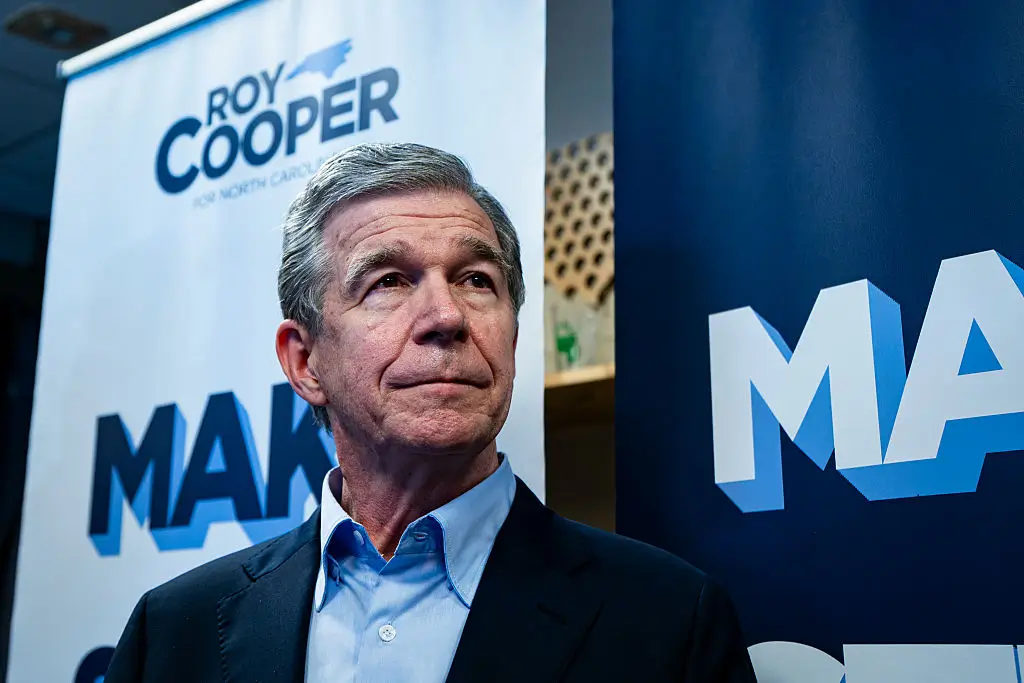
Many observers contend that it ranks among the most duplicitous political spots seen in recent memory. Republicans have aired an attack ad aimed at the Democratic contender for the U.S. Senate in North Carolina, accusing him of enabling the release of a murder suspect in South Carolina.
The advertisement targets former North Carolina Governor Roy Cooper, though nearly every element of it is untrue.
It centers on the father of a North Carolina college student who was allegedly murdered by a South Carolina man after his release from prison. The suspect possessed an extensive criminal history that included dozens of offenses in South Carolina.
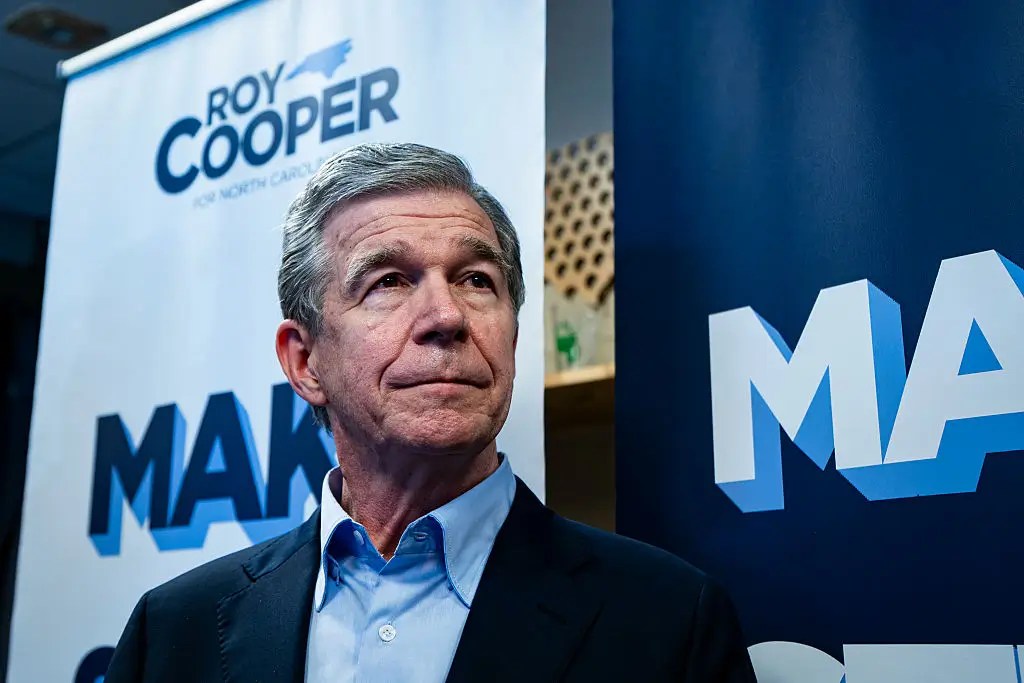
Yet the Senate Leadership Fund, a political action committee that financed the spot, continued the false storyline by posting the clip on X on Wednesday.
‘Babbling Idiot’: Trump Thinks He Has Tech Bros Eating Out of His Hand With ‘Genius’ Joke —But His Big Moment Quickly Turns into a Flop of Gold
The organization captioned the advertisement, “NEW AD: @RoyCooperNC’s reckless policies and decision to release 3,500 violent criminals put every family in North Carolina at risk. Stephen’s daughter Logan was a casualty of an agenda.”
Mediate reports that the PAC backs Republican North Carolina Senate nominee Michael Whatley and other GOP contenders.
Whatley is identified by the outlet as the former chair of the North Carolina Republican Party and of the Republican National Committee.
The advertisement incorporates footage from Charlotte television station WCNC, which covered the May 2025 murder of 22-year-old Logan Federico in Lexington County, South Carolina, where she was visiting friends.
Police say 30-year-old Alexander Dickey killed Federico during a home intrusion. In the ad, her father, Stephen Federico, recounts what happened to his daughter.
He tells the camera, “Logan was a casualty of an agenda.”
The spot then shifts to hold Cooper responsible. “Roy Cooper released 3,500 criminals onto the street; 18 of them were murderers. Forty years of Roy Cooper is enough,” Federico laments.
The commercial wrongly casts Cooper as the person who directly allowed Dickey’s release—though Dickey had been released in South Carolina under the administration of Republican Governor Henry McMaster.
While Cooper did oversee inmate releases in his own state, those moves were compelled by a court mandate. During the COVID-19 pandemic, a superior court judge ordered the release of 3,500 non-violent prisoners to protect the 32,000 people incarcerated in North Carolina, according to the ACLU.
That measure stands in stark contrast to releasing violent offenders and killers.
Social media quickly erupted with criticisms that the GOP was peddling a false narrative and deceiving voters.
“The GOP is really off their rocker,” proclaimed one heated X user.
Another commenter questioned whether the GOP even knows the difference between North and South Carolina.
“You idiots. SOUTH Carolina isn’t the same state as North Carolina.”
This X user bluntly challenged the Republicans.
“Completely false. It never happened in NC. I know we’re in an era of shamelessness, but it’s still worth noting how ashamed of yourselves you should be.”
Another commenter agreed, “A bunch of lies in this ad. @RoyCooperNC should sue you fools for slander.”
Whatley has persisted with the misleading narrative on the campaign trail, employing Logan Federico’s father to perpetuate the unfounded claim that Cooper is behind the release of his daughter’s killer.