
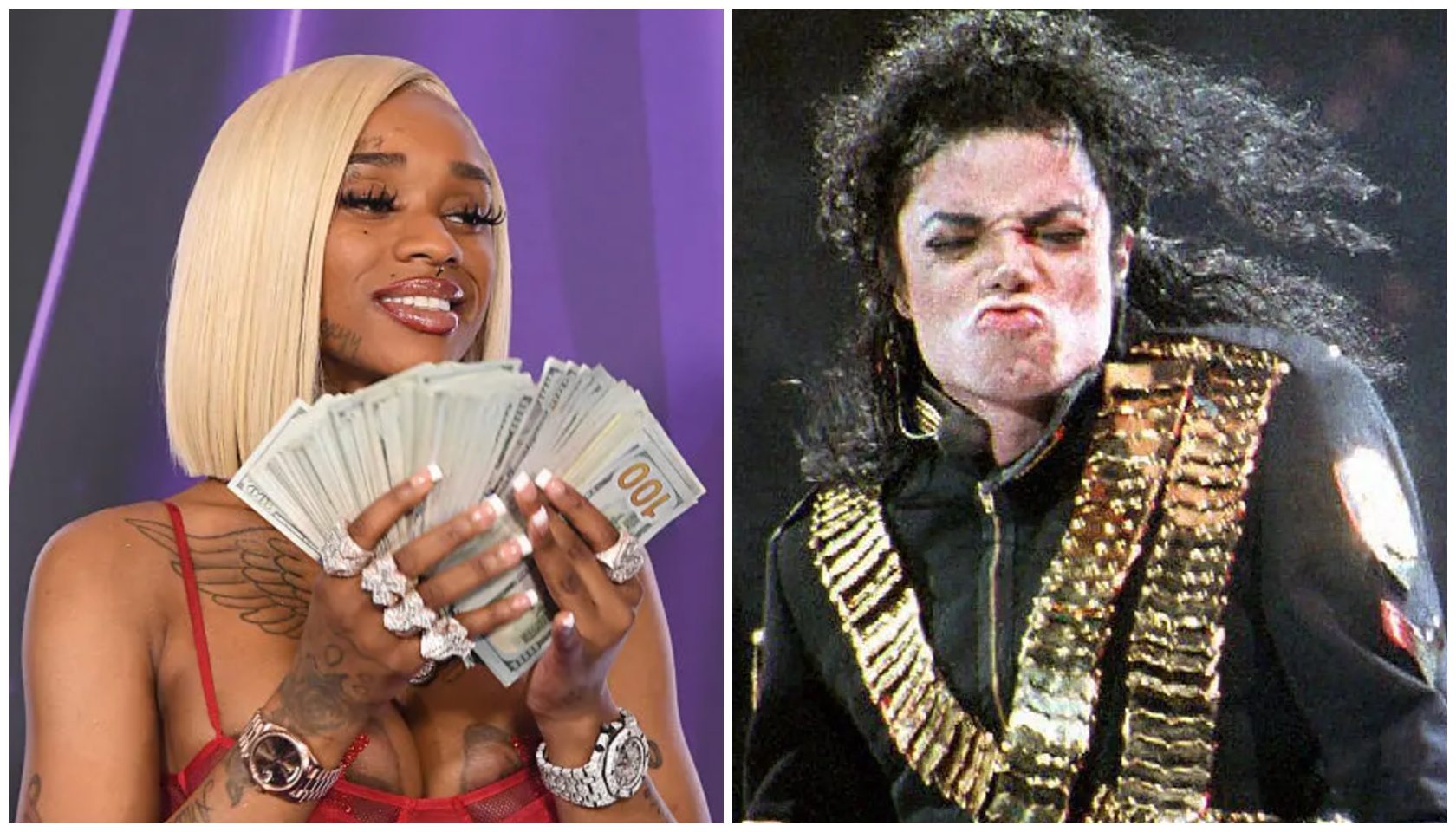
Sexyy Red can seem untouchable in most cases, but on this occasion she may have stepped over a line.
Lil Yatchy shared a clip featuring the St. Louis emcee as she unveiled new material. The track samples one of the most monumental songs in music history—the blockbuster “Beat It” by Michael Jackson.
The abrupt, raunchy twist on “Beat It” is what left audiences stunned, as she reworked it under the title “Just Eat It.”
“Just eat it, just eat it. You better not nut fast because I hate a minute man, and if that d*ck is trash, I’m telling all my friends. I’ll beat your a** and we about to throw them hands.”
Lil Boat labeled the clip as a “Sneak peek scene of the new Michael biopic.”
SMH….
Sexyy proceeded to post the clip on her own page as well, continuing the trolling with the caption, “Leaked footage from da Michael Jackson movie HOOCHIE TRIBUTE TO DA BEST LLMJ.”
With all the buzz surrounding the Michael Jackson biopic, set to premiere on April 24, 2026, opinions were mixed. The Poundtown rapper has long been known for her trolling, but many fans feel she went too far this time.
Fans of Michael Jackson took to social media to vent their displeasure. One user wrote, “Whoever cleared the ‘Beat It’ sample for Sexyy Red, I hope they know they’re not seeing heaven. Playing with MJ’s name and discography like that is beyond disrespectful!”
There has been no official confirmation whether Michael Jackson’s estate did, in fact, clear the sample or not.
Check out the full fan reactions to Sexyy Red’s questionable remix of Michael Jackson’s “Beat It” below.