
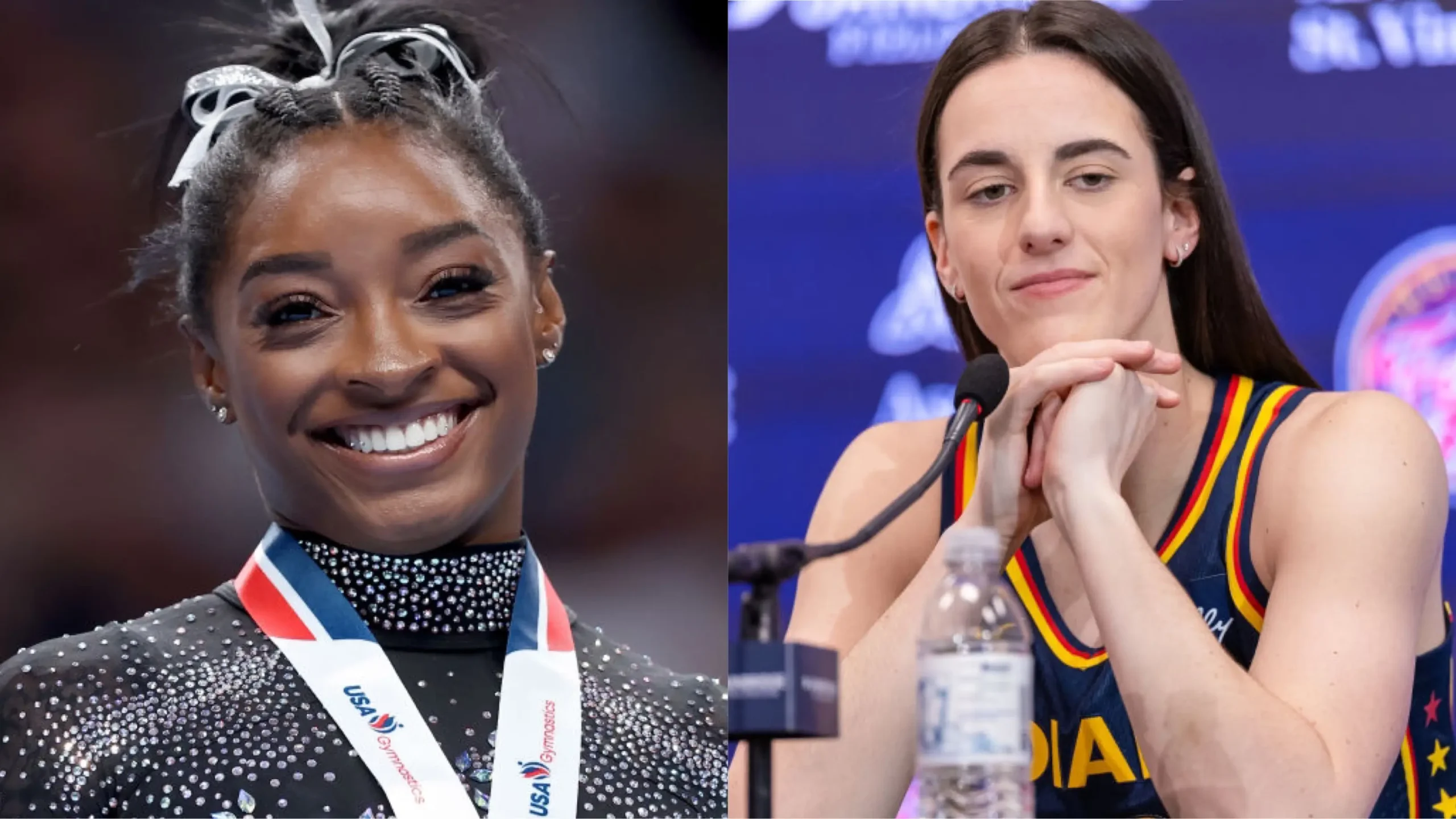
Athletic discourse continually centers on debates about who stands as the greatest, and this year’s Time magazine Athlete of the Year has sparked another lively argument as fans on social platforms debate who truly earned the 2024 honor.
WNBA star Caitlin Clark claimed the prize, yet a sizable number believe gymnast and Olympic gold medalist Simone Biles deserved it more. Some contend that race may have influenced why the 2021 AOY winner was overlooked.
Caitlin Clark’s excellence is hard to deny. In her final season at the University of Iowa, she steered the Hawkeyes to a second consecutive national championship game appearance and finished as the NCAA’s all-time leading scorer. Her WNBA entrance with the Indiana Fever was equally landmark. As the No. 1 pick, she became the first rookie to pile up a triple-double and concluded the season with Rookie of the Year honors.
Sports Illustrated highlighted her unprecedented impact, noting that no WNBA point guard, rookie or otherwise, has ever accumulated as many points and assists in a season in the league’s history. Yet despite all of her accomplishments, the backlash over her AOY selection arrived quickly and pointedly.
Sections of social media erupted with criticism, largely centering on critics’ perceived lack of championship credentials.
One X user captured the sentiment bluntly: “By winning nothing? White Privilege at its height. Simone Biles broke Olympic records but @Time named a woman who won nothing as Athlete of the Year.”
Simone Biles was certainly a more deserving athlete for the honor. But these white media outlets have their own agenda.
— Michael Owens (@MikeOwensArt) December 10, 2024
Another critic echoed similar sentiments, stating, “Simone Biles was certainly a more deserving athlete for the honor. But these white media outlets have their own agenda.”
Furthermore, one X user commented, “I feel like I’m in a fever dream because how did she get this,” with another replying, “White woman whose TEAM did not win a championship, while Simon Biles excelled in her sport.”
The case for Biles is compelling. At 27, she dominated the Paris Olympics, clinching three golds and one silver.
Moreover, her athletic résumé is unmatched: eleven Olympic medals, seven of which are gold, and a total of 40 medals across world championships and Olympic events—more than any gymnast in history, male or female.
From a financial standpoint, Biles stands among the top earners, ranking ninth among female athletes in 2024 with $11.1 million earned through sponsorships and competition results. Her role representing the United States on the world stage has been nothing short of extraordinary.
Nevertheless, in 2021, when Time named Biles “Athlete of the Year,” the honor wasn’t bestowed for her gold medals alone or her athletic prowess. Instead, her mental health took center stage.
Just a month after experiencing the “twisties” and withdrawing from four of five events at the Tokyo Games, Biles and three other gymnasts testified before the Senate about not feeling protected while their team doctor, Larry Nassar, was allowed to abuse them. Later that year, Time commended the gymnast for prioritizing her mental health amid a turbulent year ahead of the Olympics. Biles was named Time’s 2021 Athlete of the Year, while Elon Musk received Time’s 2021 Person of the Year honor.
It’s also notable that since Time launched the award in 2019, no athlete has ever been named Time’s Athlete of the Year twice. Time has also only repeated a sport once, with the U.S. women’s national soccer team honored in 2019 and soccer star Lionel Messi receiving the award in 2023.
Considering all this, not all fans sided with the criticisms of Caitlin Clark.
One avid supporter argued, “Simone Biles is great GREAT but she does this all Olympics. she literally always wins everything by herself, she’s not in a team sport. Caitlin Clark changed an ENTIRE TEAM sport in the span of 5 months bffr. please name me another player who did this? men or women. i can wait.”
Clark’s impact is measurable. She drew unparalleled attention to the WNBA, with record-breaking game viewership and a rookie season that redefined expectations for playmakers at the point guard position.
When it came to earnings, Clark’s 2024 income matched Biles’ at $11.1 million, underscoring her marketability and influence, according to Sportico.
As the debate continues, both athletes have been named finalists for BBC Sports’ 2024 World Sports Star of the Year award, joining remarkable competitors like Catherine Debrunner, Armand Duplantis, Sifan Hassan, and Leon Marchand.
The uproar surrounding Clark’s selection goes beyond a simple disagreement over athletic achievement; it mirrors broader conversations about recognition, representation, and the metrics used to define sporting excellence.
The race discussion has haunted Clark for years, surfacing in debates about her rivalry with fellow WNBA star Angel Reese.
Conscious of this discourse, she issued a statement addressing her latest recognition.
Caitlin Clark says there needs to be a better effort to elevate Black women in the WNBA
“I want to say I’ve earned every single thing, but as a white person, there is privilege. A lot of those players in the league that have been really good have been Black players. This league… pic.twitter.com/6RfZ1YIdzS— NBACentral (@TheDunkCentral) December 10, 2024
“I want to say I’ve earned every single thing, but as a white person, there is privilege. A lot of those players in the league that have been really good have been Black players. This league has kind of been built on them,” she tweeted, adding, “The more we can elevate Black women, that’s going to be a beautiful thing.”
Whether you align with Clark or with Biles, one fact remains: Both athletes have transcended their respective disciplines, inspiring millions and pushing the boundaries of what’s possible in women’s sports.