
President Donald Trump set out on what the White House described as a decisive mission designed to project command, resolve, and clarity. Yet in the first 48 hours following the initial strikes on Iran, Trump, his administration, and his allies found themselves unable to settle on a single reason for why the United States had suddenly been drawn into another war.
The rollout quickly fell apart into a sequence of conflicting explanations — Trump uploading clips from Mar-a-Lago, officials proposing competing rationales, and allies frantically defending a narrative that seemed to shift by the hour.
Then CNN stepped in with a blunt reality check.
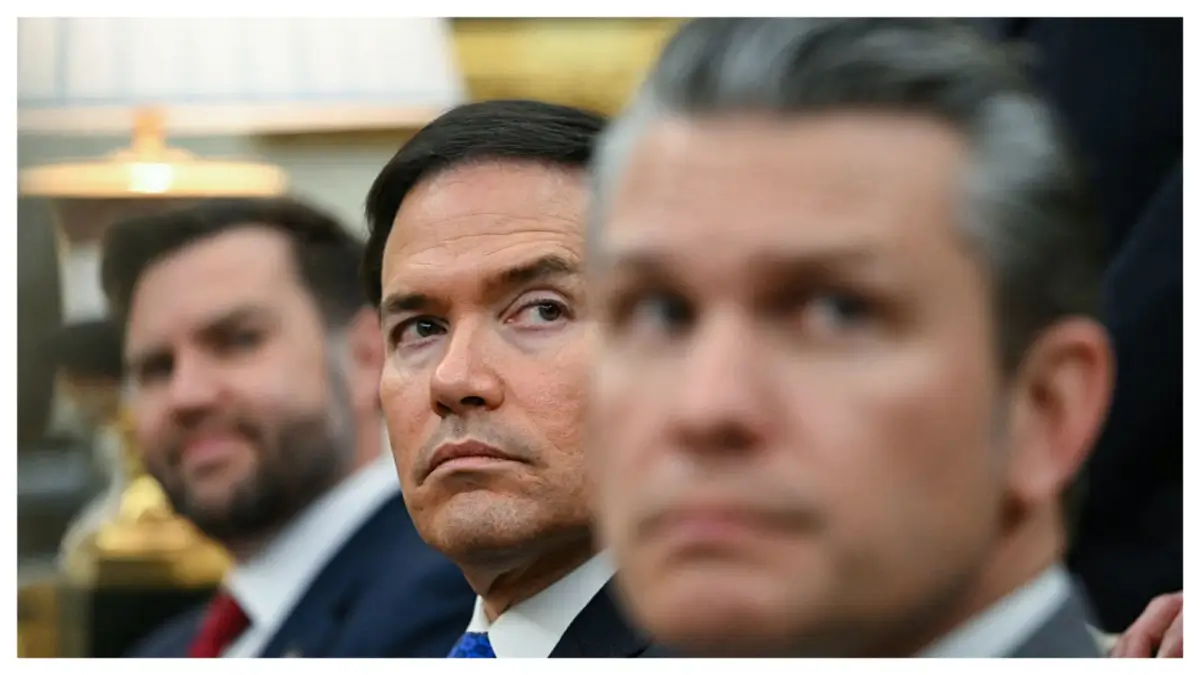
Just as Secretary of State Marco Rubio stepped to the lectern Monday, the network aired a brutal 30-second montage weaving together the administration’s shifting talking points on the war — one explanation after another collapsing under its own inconsistencies.
‘Fire Her!’: Trump Is Protecting One Cabinet Member from Being Forced Out — An Insider Leaked the Name and Says It Blows Back Inside the White House If He Won’t Budge
Moments later, Rubio faced the cameras and offered remarks critics say inadvertently dismantled the administration’s cover story entirely.
View on Threads
“No, I might have forced their hands. You see, we were engaged in negotiations with these lunatics. And it was my view that they were going to strike first,” Trump said. “They were going to attack. If we didn’t strike first, they would attack us and we would suffer greater losses.”
Rubio soon found himself scrambling to realign with the president after his earlier remarks had strongly implied that U.S. military actions were tied to an Israeli timetable.
“I was asked very specifically… did we go in because of Israel? I said no, this had to happen regardless,” Rubio told reporters on Capitol Hill before a briefing with lawmakers, in a tense exchange.
He asserted that Trump “made the decision to go first” after he judged that Iran’s diplomatic talks had collapsed.
National security expert Danny Citrinowicz pointed to the strategic risk embedded in Rubio’s original remarks.
“If there is a strategic risk greater than Iran itself for Israel, it is the perception that Israel dragged the United States into a discretionary and open-ended war. In the current American political climate, perception matters as much as operational reality.”
By Tuesday, social media continued to erupt with responses ranging from disbelief to anger.
“They want to control a war so badly that they’re openly declaring ‘war,’ even though it remains unlawful to wage war without Congress. That’s why careful Republicans are calling it an operation,” one critic remarked.
“The most incompetent and the most embarrassing ‘leaders’ this country has ever seen. Strong teams speak with one voice; this group merely bullshits their way into a major worldwide crisis,” another user added.
Before Saturday’s joint U.S.-Israeli strikes, officials in the Trump administration had overstated Iran’s immediate capability to strike the United States and exaggerated its nuclear program, which they had previously boasted about erasing. After the strikes, they asserted an “imminent threat” existed, a claim later undercut by Pentagon briefings.
Trump initially defended the attacks as a shield for demonstrators, a counter to nuclear threats, and a weakening of terrorist networks, while also suggesting that the American people might help the Iranian populace overthrow their government.
Americans across the Middle East were urged to leave immediately due to safety concerns. Six U.S. service members have died, with three F-15E jets downed in a likely friendly-fire incident in Kuwait. The rapid escalation has brought intense scrutiny to Trump’s military decisions, as lawmakers and the public grew more doubtful of a war fought without congressional authorization.