
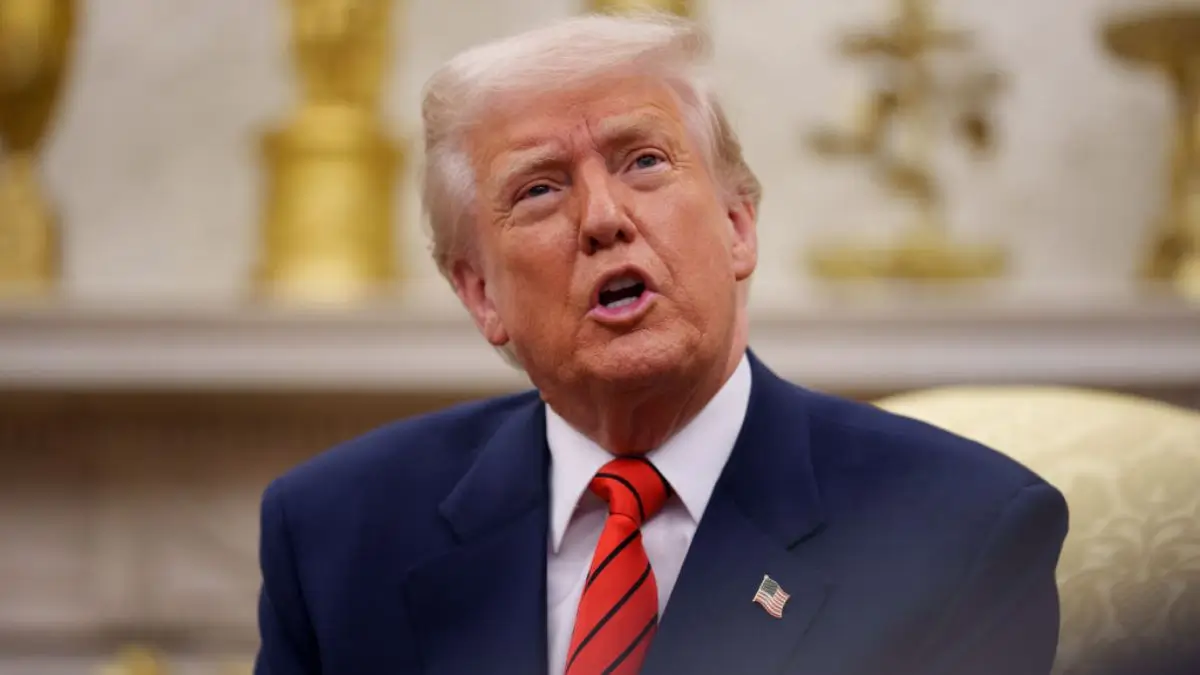
President Donald Trump’s method for handling criticism has long followed a recognizable script: lash out, dismiss the question, and claim victory. Yet the present moment seems to carry far higher stakes.
As Trump erupted over a report that questioned whether he truly has a concrete exit plan in Iran, experts, critics, and even U.S. allies were already voicing deeper concerns — not merely about the war itself, but about whether the administration has wandered into a strategy that appears increasingly hard to manage with every new move.
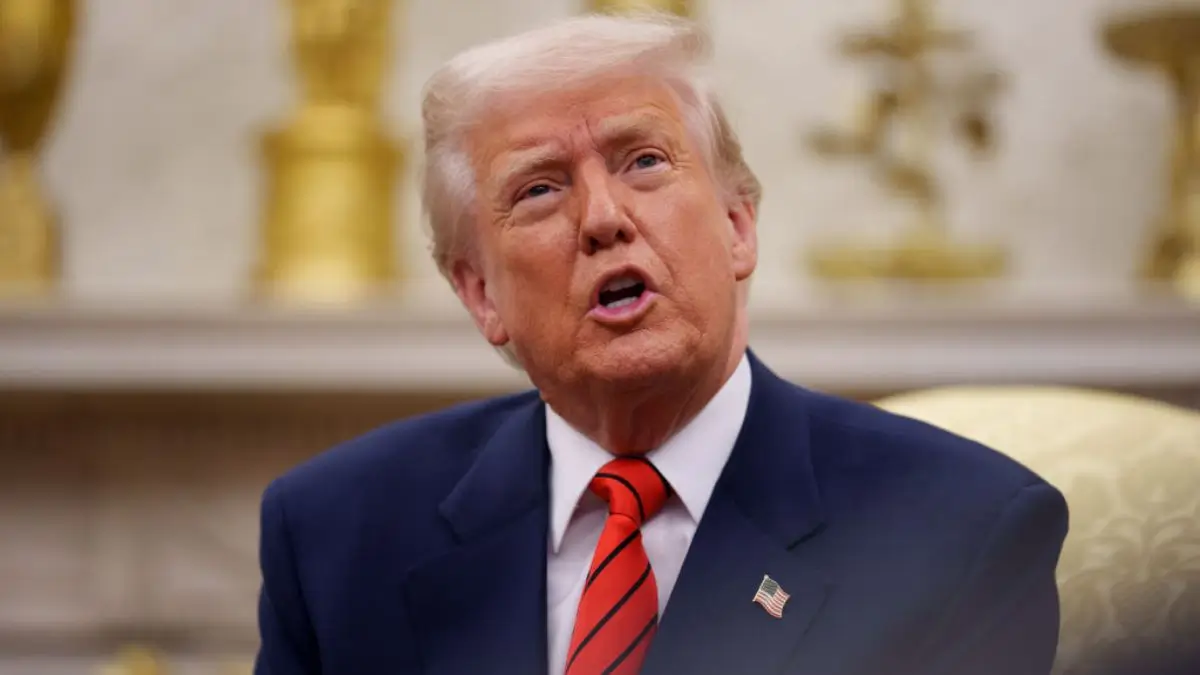
That worry centers on what analysts describe as an “escalation trap,” a pattern where every threat and retaliatory move narrows the options ahead and increases the odds of a broader, more dangerous confrontation.
Rather than cooling tensions, Trump’s blend of military warnings, economic pressure, and public ultimatums has only heightened the risk of a wider conflict, greater civilian casualties and lasting global consequences — a gap that experts say reflects a perilous miscalculation, with the administration underestimating Iran’s likely response and overestimating its own degree of control.
‘Insane’: Trump Spirals When Democrats Won’t Budge — Slams the ‘Crazy Button,’ Unloads His Wildest Threats Yet and Starts Derailing His Own Details Mid-Rant
A report from The New York Times by Washington correspondent David Sanger said Trump was “eyeing an exit” from the war, but had not yet decided whether to take it.
The report set Trump off.
“The United States has blown Iran off of the map, and yet their lightweight analyst, David Sanger, says that I haven’t met my own goals,” Trump wrote on Truth Social Saturday, before adding, “Yes I have, and weeks ahead of schedule!”
He went further, claiming, “Their leadership is gone, their navy and air force are dead, they have absolutely no defense, and they want to make a deal,” before pivoting to attack the paper itself.
For now, the war has entered its fourth week with no clear resolution. And while Trump continues to project confidence, experts say the bigger issue may be what comes next — and whether the administration is already locked into a cycle that’s difficult to break.
Political analyst Robert Pape warned the administration appears to be misreading clear signals from Iran about how it plans to respond if the conflict escalates.
“What you’re seeing is Iran is shifting,” Pape said. “The first bombs killed leaders, but hardened the regime.”
He described what he called a move toward “horizontal escalation,” pointing to Iran’s actions around the Strait of Hormuz — a key global energy chokepoint — and warning that the next phase could extend far beyond the immediate battlefield.
Iran recently fired two ballistic missiles toward the U.S.-U.K. base at Diego Garcia, more than 2,300 miles away, a move that didn’t need to land to make its point.
“There are many more like that that can hit Rome, can hit Paris, and can hit Berlin,” Pape said. “So, they are explaining very clearly with their behavior, not just their words, that if we do ground force operations in stage three, they’ve got another plan for stage three, and that is indiscriminate casualties on civilians.”
That warning comes as Trump has continued to raise the stakes.
Over the weekend, he issued a 48-hour ultimatum demanding Iran reopen the Strait of Hormuz, warning the U.S. would “obliterate” Iranian power plants if it did not.
Iran’s response was swift and pointed. The country’s parliamentary speaker warned that any strike on Iranian infrastructure would render energy facilities across the Middle East “legitimate targets,” threatening “irreversible” consequences and signaling a willingness to widen the conflict.
Economic pressure is already mounting. Oil prices have surged, and U.S. gas prices have risen as fears grow that the Strait of Hormuz could remain unstable or partially blocked.
Josh Lipsky, senior director of the Atlantic Council’s GeoEconomics Center, said Iran may already be leveraging one of its strongest advantages.
“This chokepoint has ripple effects across the globe,” Lipsky said, noting that Iran can create global disruption even without matching U.S. military might.
Online, critics have seized on the back-and-forth, arguing Trump may have stepped into a predictable trap. One commenter called the war “a huge mistake” and highlighted rising costs, civilian casualties, and the absence of a clear endgame.
Others focused on the long-term damage to alliances and regional stability.
“Earlier administrations spent years building the global alliances and intelligence networks that actually allow us to monitor threats. trump traded decades of strategic stability for a few weeks of chest-thumping. Unilateral strikes do not make us safer; it just makes the world more volatile.”
Another reaction framed the conflict as a slide from Trump’s early self-assurance to mounting strain: “Week 1. We Won. Week 2. We’re winning. Week 3. Send help! Where are my allies? Week 4. I need 200 billion dollars from taxpayers to fund and continue the war ‘we won’ in Week 1. The sooner Donald Trump is removed, the better off our planet will be.”
Still others went further, tying Trump’s public outbursts to the broader situation. “Trump’s instant rage at anyone or anything that questions his actions are an indication of Trump’s eminent Narcissistic Collapse. …”