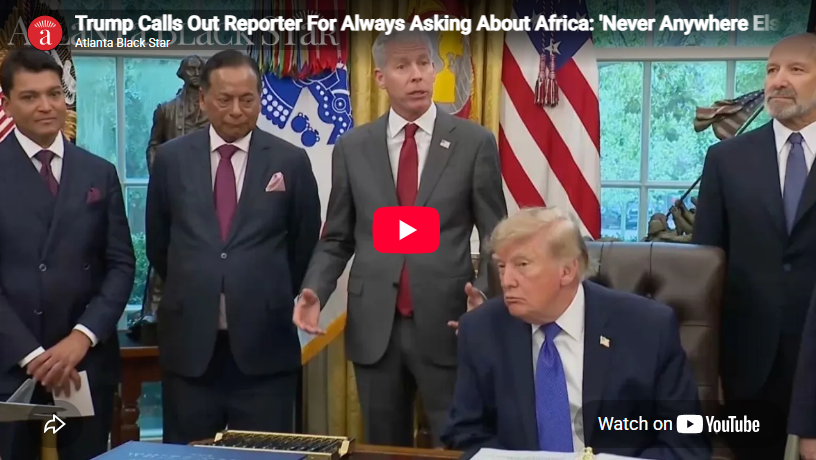
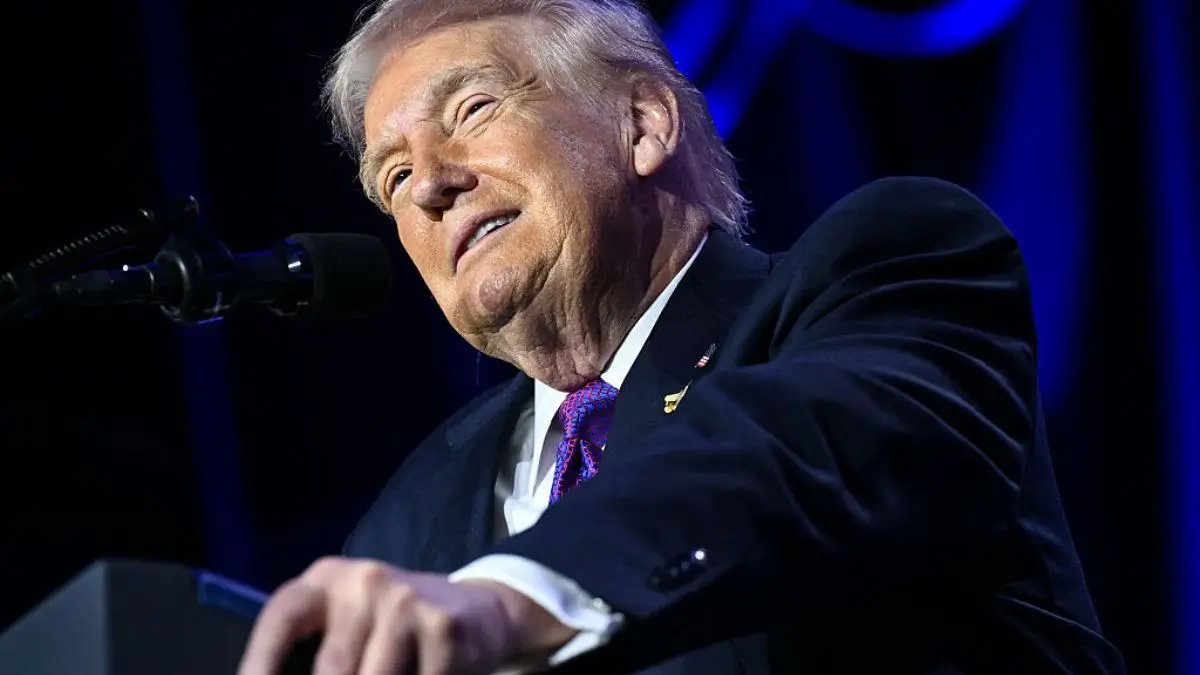
President Donald Trump boasted about plans for a new steel facility that an India-based company intends to build in Iowa, but a single question from an African correspondent exposed his cover and left him oblivious to it.
During a White House Oval Office event on Monday, September 28, Trump revealed that Mesabi Metallics plans to erect a $15 billion steel mill in Iowa, with production slated to commence in 2030.
Flanked by Cabinet members, executives from the company, and Iowa Republicans, he hailed the project as the biggest steel plant proposed in the United States and among the largest of its kind worldwide.
The White House asserted that the proposed development in Lee County would generate 6,000 construction roles and 1,750 permanent positions, with wages of $49 an hour.
“This steel will be mined, melted, and manufactured here in the United States, which is rather unusual,” Trump boasted.
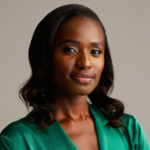
Yet, during a post-announcement press briefing, Angolan White House correspondent Hariana Verás asked Trump outright where he intended to obtain the plant’s raw materials.
‘Traitor!’: Trump Promises Recklessly as Gas Prices Climb, Then MTG Delivers a Reality Check He Didn’t Expect and MAGA Responds in Fury
“Mr. President, two questions—one for the investors. Africa is a vast, resource-rich continent that could largely contribute to this venture. Are you considering importing some materials for this project from an African nation? For instance, Congo and Angola could potentially supply them,” Verás asked.
A company representative interjected: “Absolutely. The bulk of the essential inputs for this project will be sourced domestically within the United States. A few materials, such as manganese, may have to be imported to produce the highest-grade steel, so this won’t all be U.S.-sourced. Therefore, we will pursue global sourcing for those components, and Africa remains a possibility.”
Trump, evidently remembering the reporter he once described as “beautiful,” pointed at Verás and interjected, “She loves Africa. She consistently asks about it. She never discusses any other region. That’s how it should be. Right?”
“Nice job,” he added.
It was evident that he did not grasp the substance of her question, nor did he realize the company executive’s response undercut his “Made in America” claim.
In June 2025, Verás attended a meeting with Trump after the signing of a peace accord by the Democratic Republic of the Congo’s foreign minister, Thérèse Kayikwamba Wagner, and her Rwandan counterpart, Olivier Nduhungirehe.
She conveyed that people in the DRC were grateful for his efforts to help bring peace to their country.
An unrestrained Trump could not resist.
“That’s very kind,” he said, then shockingly noting that he had been advised not to comment on Verás’ appearance. “That’s wonderfully worded. Karoline told me I shouldn’t say this because it could be politically risky, she said, ‘She’s beautiful.’ And you are beautiful!”
Yet he kept praising the reporter, unabated.
And he reiterated it, as Verás laughed at the compliment and others in the room smiled.
“I’m not supposed to say that, you know?” Trump pressed. “It could jeopardize my political career, but I’ll say it anyway: you are beautiful, and you’re beautiful inside. I wish I had more reporters like you.”
Naturally, a clip of the moment surged across social media, with critics accusing Trump of fixating on a female journalist’s appearance once more.
Since Trump reassumed the presidency in early 2025, he has slashed billions in conventional aid to Africa, replacing it with private investment and commercial arrangements.
Critics contend that the reduction in aid is directly linked to an Ebola outbreak that has already claimed more than 3,900 lives and affected over 8,000 people, according to United Nations figures.