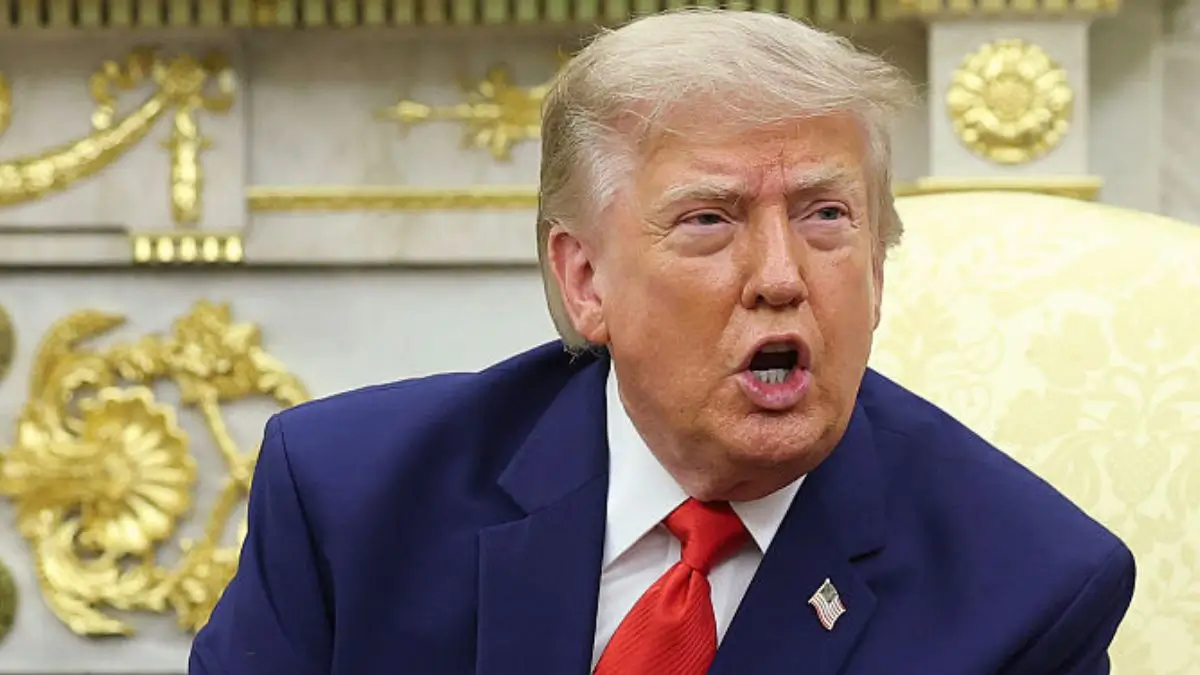
Donald Trump has long presented his political appearances as grand, overflowing spectacles. They come with thunderous crowds, dramatic entrances, and backdrops primed for television.
Every seat contributes to the narrative. Each participant in the optics plays a role. It would appear that even the jawlines needed the presidential seal of approval.
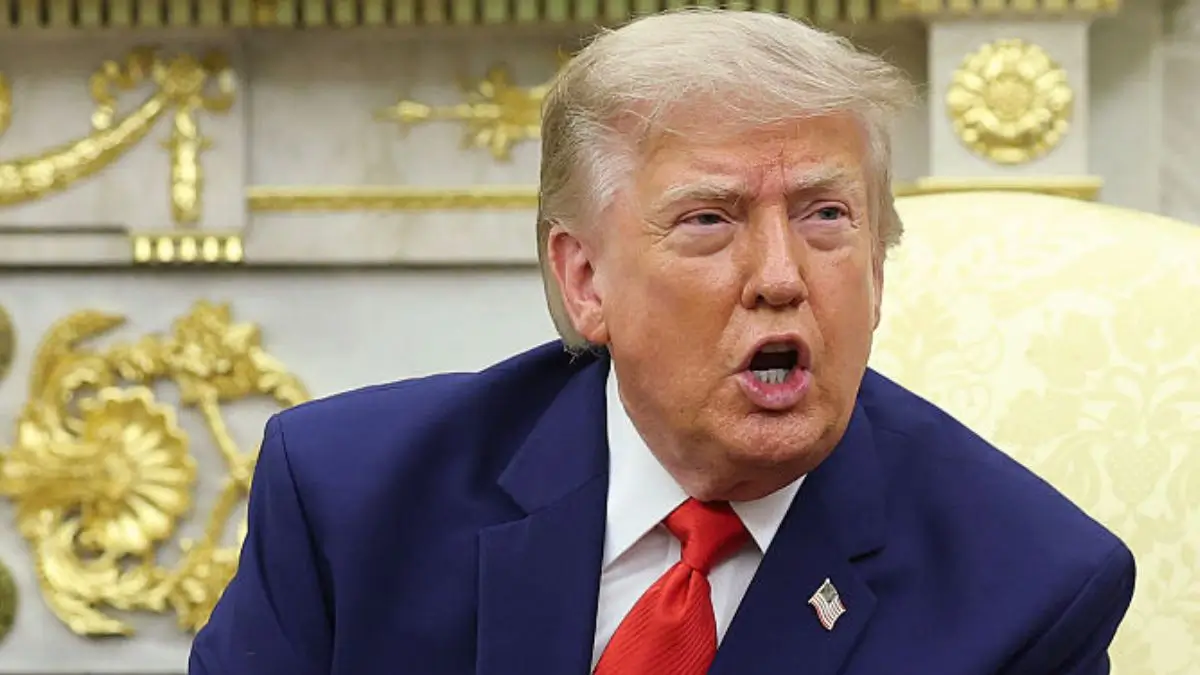
Former DHS Chief of Staff Miles Taylor says Trump’s “spontaneous” appearances actually demanded significant behind-the-scenes coordination.
Ordinary events, he contends, were sometimes transformed into elaborate productions before Trump’s arrival.
‘Are You Kidding Me?’: Natalie Harp’s Desperate Attempt to Stay Close to Trump Exposes How Far She’ll Go for Her Job
According to Taylor, Trump’s team pressed staffers on the expected turnout before giving the go-ahead, seeking assurance the venue would appear full.
“When I worked with the White House on scheduling events for the president, nothing was truly approved until certain very specific questions came back from the ether: What’s the capacity? Are the seats filled? How many?” he recalled, according to the IrishStar.
Taylor claimed Trump “measured his power by crowd size.” He added that the former reality television star “couldn’t stand stepping out to tepid applause.”
The room had to project camera-readiness. Organizers would cluster supporters near the podium, keeping the most animated section in frame while keeping emptier areas off-camera.
If seats couldn’t all be filled, cameras were allegedly steered away from those gaps. Yet Trump’s concern seemingly extended beyond raw headcount — he reportedly had opinions about the crowd’s appearance as well.
The former Trump aide pointed to a spring 2019 visit to the southern border. Before the event, staffers were allegedly instructed to pick officials who would “look tough. Like soldiers.”
The physical criteria were unusually exact: “No beards. Tight jawlines. Beefy.”
“We thought the request was bizarre,” Taylor admitted.
Border security reportedly became a casting call — a qualified agent could be sidelined for lacking a sufficiently strong jawline.
Taylor asserted Trump personally inspected the assembled border agents on arrival, placing “an awkward hand” on one’s shoulder before declaring, “You look like you came straight from central casting.”
That line might fit a Hollywood audition; applied to trained federal agents, it landed even odder.
Taylor’s account suggests competence wasn’t the only requirement — those around Trump allegedly needed to radiate made-for-TV toughness, selected partly for physique, facial hair, and bone structure.
Newsbreak readers hardly believed the alleged criteria and joined the conversation with gusto.
“Twisted and sick. He can MARKET TO IDIOTS I’ll give him that,” one reader wrote.
“Mr Trump is the epitome of a narcissistic sociopath. I want to be a dictator. He wants to be the sole voice, the Boss of the world. You’ve heard him present himself as the boss in front of world leaders,” another commented.
Another wrote, “It’s all for the cameras. every last bit of it is a … reality show.” A different reader quipped, “Crowd size or manhood deprivation?!”
One more joked, “Should have been titled ‘Trump-a-the-Lozzas,’” while another remarked, “The grift never ends!” “Not surprising from the egomaniac president. Vote all [blue] in November,” proclaimed a commenter.
Taylor enjoyed an unusually close vantage point within the administration.
He served at the Department of Homeland Security from 2017 to 2019, later ascending to chief of staff. In 2020, he revealed he had anonymously written a pointed 2018 New York Times essay. Trump’s sensitivity to crowd size predates that era: at his 2017 inauguration, press secretary Sean Spicer falsely claimed it drew the largest audience ever seen.
The topic resurfaced this summer. Trump was discussing renovations near the Lincoln Memorial Reflecting Pool when he drifted back toward his favored metric of performance.
Trump claimed his 2017 inauguration crowd rivaled the 1963 March on Washington, where Dr. King delivered his “I Have a Dream” speech.
He argued his own crowd was actually more compact, contrasting his figure of 250,000 with what he claimed were reports of a million attendees at the march. The numbers did not align with the historical record.
The March on Washington drew roughly 250,000 people. Trump’s 2017 inauguration was estimated between 300,000 and 600,000. Obama’s 2009 inauguration drew around 1.8 million.
The crowd dispute resurfaced at the September 2026 Republican convention in Dallas. Trump described the gathering as a “major, sold-out hit” and claimed its numbers outpaced the NFL’s.
Journalists inside the 20,000-seat American Airlines Center noted empty sections. Organizers had begun offering free tickets before the event even started.
Then the cameras broke stagecraft’s cardinal rule: they panned outward.
The footage revealed rows of empty seats that tighter close-ups had concealed. Apparently no one reminded the cameras to stay on their marks.
A day later, another camera delivered an unsolicited close-up. Trump spotted an unflattering shot of his hair on the convention’s giant screens and drew attention to it himself.
Taylor’s accounts suggest these episodes are linked by more than vanity. They reveal how heavily Trump purportedly relies on appearances to project strength, popularity, and control.
For Trump, the audience may exist not merely to observe the production. According to Taylor, the crowd — and every “beefy” jawline behind him — could be part of the performance.