
Inside the White House, a familiar script is unfolding once more: grim headlines pile up, the press refuses to echo the victory lap President Donald Trump wants to hear, and the administration’s response quickly devolves from irritation into outright clashes with the media.
That pattern flared up again this week as tensions surrounding the Strait of Hormuz intensified. Trump vented at coverage that questioned his approach and issued veiled threats. White House Press Secretary Karoline Leavitt tried to push back, but Defense Secretary Pete Hegseth amplified the moment with a visibly furious on-camera tirade.
The upheaval arrives at a delicate moment for the administration. Trump has repeatedly claimed that the confrontation with Iran is under control, even as fresh reporting continues to raise uncomfortable questions about whether the White House was fully prepared for the possibility that Tehran would disrupt one of the world’s most critical oil routes.
Roughly one-fifth of the globe’s oil supply passes through the narrow Strait of Hormuz off Iran’s southern coast. Any disruption there can ripple instantly through global energy markets.
‘Not a Trace of Decency’: Official White House Photo Suddenly Turns Up in a ‘Beyond Disgusting’ Place — When Trump Is Confronted, He Melts Down in a Tantrum That Says It All
Yet rather than confront the mounting scrutiny, Trump directed his anger at the reporters who were covering it.
The president exploded over a CNN report describing damage to U.S. military refueling aircraft during the conflict, accusing news outlets of spreading Iranian propaganda and suggesting journalists themselves should face punishment.
“The story was knowingly FAKE and, in a certain way, you can say that those Media Outlets that generated it should be brought up on Charges for TREASON for the dissemination of false information!” Trump wrote on Truth Social Sunday evening, threatening consequences for the outlets that reported it.
He insisted Iran was being “decimated” and accused what he calls the “Radical Leftwing Press” of deliberately pushing false narratives to make him look weak.
Trump even praised Federal Communications Commission chairman Brendan Carr for examining the broadcast licenses of networks he claims are biased against him.
“I am so thrilled to see Brendan Carr… looking at the licenses of some of these Corrupt and Highly Unpatriotic ‘News’ Organizations,” Trump wrote.
View on Threads
The uproar reflected a growing sense of frustration within the administration as questions about the war’s consequences and the level of preparedness continued to surface.
Those tensions boiled over after a CNN report, citing national security officials, suggested the White House may not have fully anticipated Iran’s ability to threaten shipping through Hormuz after U.S. strikes—a claim the administration quickly sought to crush.
Leavitt stepped into the fray first on Friday morning. In a lengthy post on X, she labeled the CNN piece as “100% FAKE NEWS,” accusing the network of leaning on anonymous sources and misrepresenting classified briefings.
She argued that American military planners had long anticipated the possibility of Iran attempting to disrupt Hormuz shipping and contended such contingencies were built into the strategy before the launch of “Operation Epic Fury.”
Calling the notion of the administration being unprepared “PREPOSTEROUS,” Leavitt accused the press of working overtime to undermine Trump.
“The Fake News is working overtime to discredit President Trump, his Administration, and our U.S. Military,” she wrote.
The network later updated its story with a clarification that officials had briefed lawmakers on longstanding contingency plans, though some sources argued those briefings did not outline immediate solutions. CNN said it stood by its reporting—and the administration’s forceful defense promptly triggered a backlash online.
Critics argued that the explanation merely raised new questions about the Trump administration’s planning.
One reply bluntly observed, “The problem is, you all are famous now for lying, and it is now expected of you all. Not sure if you all have ever read the story of the boy who cried wolf, but you should.”
Another reply highlighted a glaring contradiction: “You do understand this makes it worse, right? If you actually foresaw Iran being able to cut off 20% of the world’s oil and you still proceeded with this war without even filling the Strategic Petroleum Reserve first… that’s not the defense you think it is.”
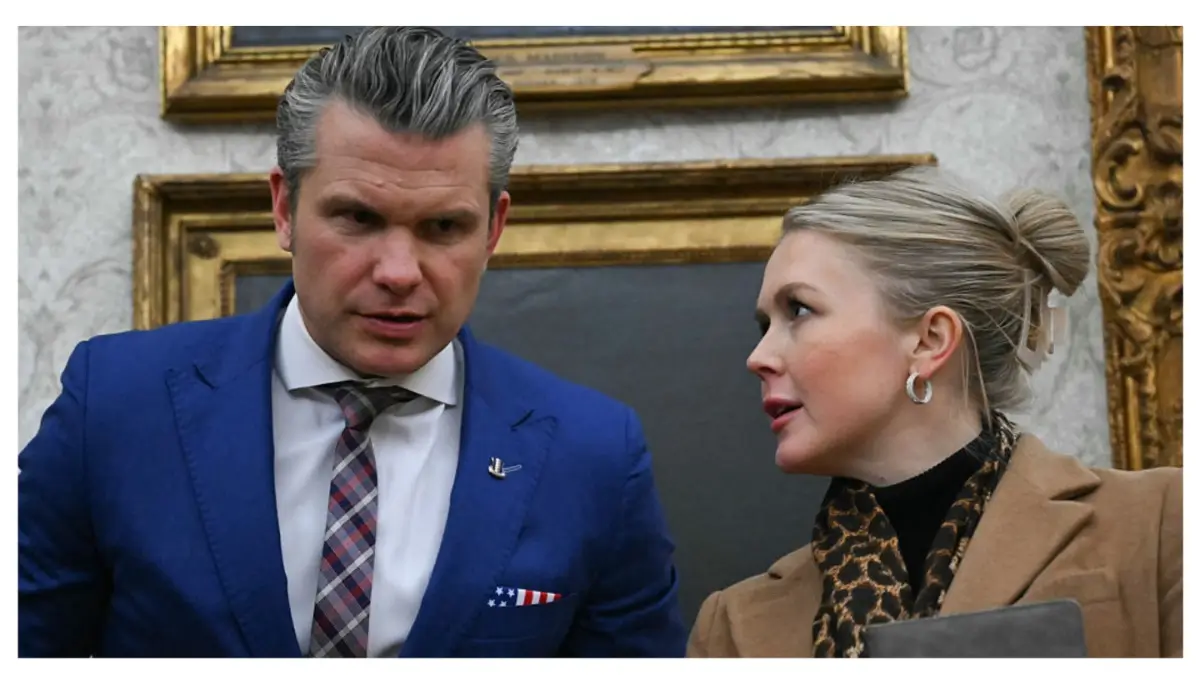
Yet the most uncomfortable moment for the administration came when Hegseth stepped into the breach.
Speaking at the Pentagon on Friday, the defense secretary delivered a sharp, two-minute broadside against CNN’s report, dismissing it as “more fake news” and accusing journalists of rooting for American failure.
“No quarter, no mercy for our enemies,” Hegseth declared. “Yet some in the press just can’t stop.” He asserted the report was “patently ridiculous” and accused reporters of twisting partial information.
“CNN doesn’t think we thought of that,” he said. “It’s a fundamentally unserious report.”
At one point Hegseth even took aim at the network’s prospective ownership, remarking: “The sooner David Ellison takes over that network, the better.”
The fiery defense did little to calm the situation. Instead, the tense exchange quickly went viral, with critics mocking Hegseth’s combative tone and questioning why the administration seemed so rattled by reporting on the conflict.
“The brave men and women aren’t the problem. It’s the pieces of trash like you who send them off to die and kill for Israel that’s the problem,” a critic blasted.
Other posts ridiculed Hegseth’s combative briefing. “Pete Hegseth is having a brain meltdown.” Another noted his sneer toward a country with a free press, arguing that the real critique was directed at him rather than the military. “They’re not criticizing the military. They’re criticizing YOU. It’s your ineffective and incompetent use of it.”
“Pete Hegseth is becoming the face of the Iran war,” one comment read. “And not in a good way. The fact that he’s the Secretary of War is absolutely mind-blowing.”
But the tensions in Washington are only part of the problem.
While clashing with the press, Trump has also been urging foreign governments to dispatch naval forces to help secure Hormuz.
To date, the response has been markedly tepid compared with the president’s calls.
Trump warned that countries benefiting from shipments through Hormuz should contribute to its defense, telling the Financial Times that a lack of support could be “very bad for the future of NATO.” He also suggested that China should assist in policing the waterway given its heavy dependence on oil transiting the area.
But several allies have already ruled out sending ships. Germany, Spain and Italy indicated they would not participate, while Australia said it had no plans to deploy vessels. Britain and Denmark said they would explore options but stressed the importance of avoiding escalation.
The result is a widening gap between Trump’s demands and the willingness of other nations to get involved, leaving the administration increasingly on its own as the conflict deepens.