

As the sitting commander-in-chief approaches his eightieth birthday next month, the White House is intent on signaling that his health has never looked better. Yet the pattern of his visits to Walter Reed National Military Medical Center keeps fueling questions about what, exactly, is routine and what might be more concerning.
The White House disclosed late on Monday, May 11, that Trump would return to Walter Reed on May 26 for what it described as “routine annual dental and medical assessments as part of his regular preventive health care.”
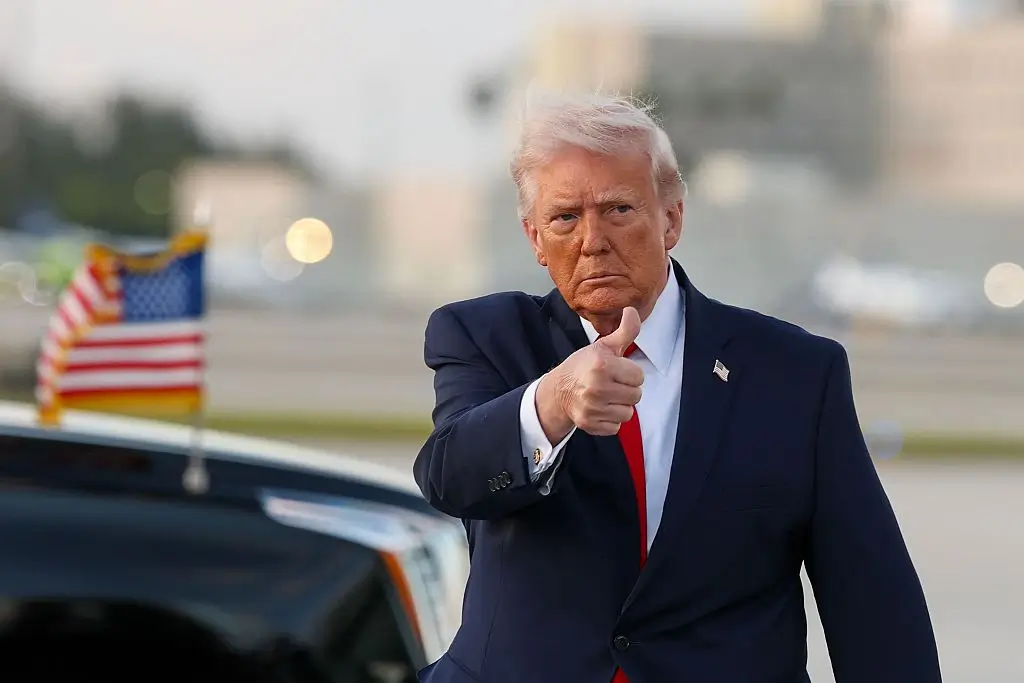
For a growing number of observers, the term routine hardly fits the day’s events, as this would mark at least his fourth medical appointment in a span of just 15 months.
Trump, whose status as the oldest person ever elected to the presidency has become a talking point, has consistently tried to push back against persistent questions about his health, even joking about some of his less-than-ideal habits, including claims that his best workout would clock in at a single minute a day, according to NBC.
‘Is He Really Serious?’: Trump Appears to Struggle for Words in Public, Prompting a Notable Moment That Had Viewers Rewinding the Clip
Nevertheless, social media did not stay quiet, and speculation surged after the announcement of Trump’s visit to Walter Reed.
“They’re peddling falsehoods about Trump’s physicals and dental checks. Moreover, his trips to Walter Reed are becoming more frequent, and the bruises seem to be getting more noticeable. I expect another cognitive assessment, and I doubt he’ll brag about acing it this time,” one X user wrote.
Another commenter asked, “What is the Trump administration concealing about Donald Trump’s health? Dementia? Cognitive heart failure? Cancer? President Biden appears to be sicker, yet he visits the doctor less frequently than Trump. Why do the doctors at Walter Reed require cognitive tests and other screenings on a monthly basis? Such tests are typically reserved for the end stages of life before hospice.”
A further post quipped simply, “time for the cognitive test again.”
One X user summed it up with a brief, two-word post, “tick tock.”
The check-up notice arrived on the heels of a widely shared clip showing the president dozing off during a Monday Oval Office briefing on maternal health, a moment that captured a tired-looking president flanked by senior officials, including Dr. Mehmet Oz, the administrator of the Centers for Medicare & Medicaid Services, and Alabama Senator Katie Britt.
Earlier in the month, another viral clip showed Trump struggling to walk in a straight line, zigzagging to such an extent that the camera needed to pan to keep him in frame as he departed Marine One.
A day later, at an event honoring military mothers, Trump appeared with hands that looked swollen and bruised, their skin shaded with two noticeably divergent tones of concealer. The White House and Trump have repeatedly attributed the bruising to aspirin usage and the sheer volume of handshakes.
Earlier in the year, he also attended an event sporting a neck rash and has previously been observed struggling with his gait.
Two days after the latest announcement, a professional photographer captured a close-up of Trump’s hand—described by some as “disfigured”—as he walked toward an aircraft.
Trump’s first annual physical in his second term took place in April 2025, but concerns about his health resurfaced after that visit, including swelling in the ankles, which led to a diagnosis of chronic venous insufficiency.
He returned to medical providers twice last autumn and also underwent a separate MRI examination, which the White House described as “routine.” Yet MRIs are not typically included in a standard annual health screening.
Trump has frequently boasted about his “good health” and feeling exceptionally well, yet he also underwent at least three cognitive tests last year. He confused those tests with IQ assessments, boasting about the difficulty and claiming he “aced” them.
Cognitive tests are generally employed to diagnose and monitor dementia and other forms of mental decline.