
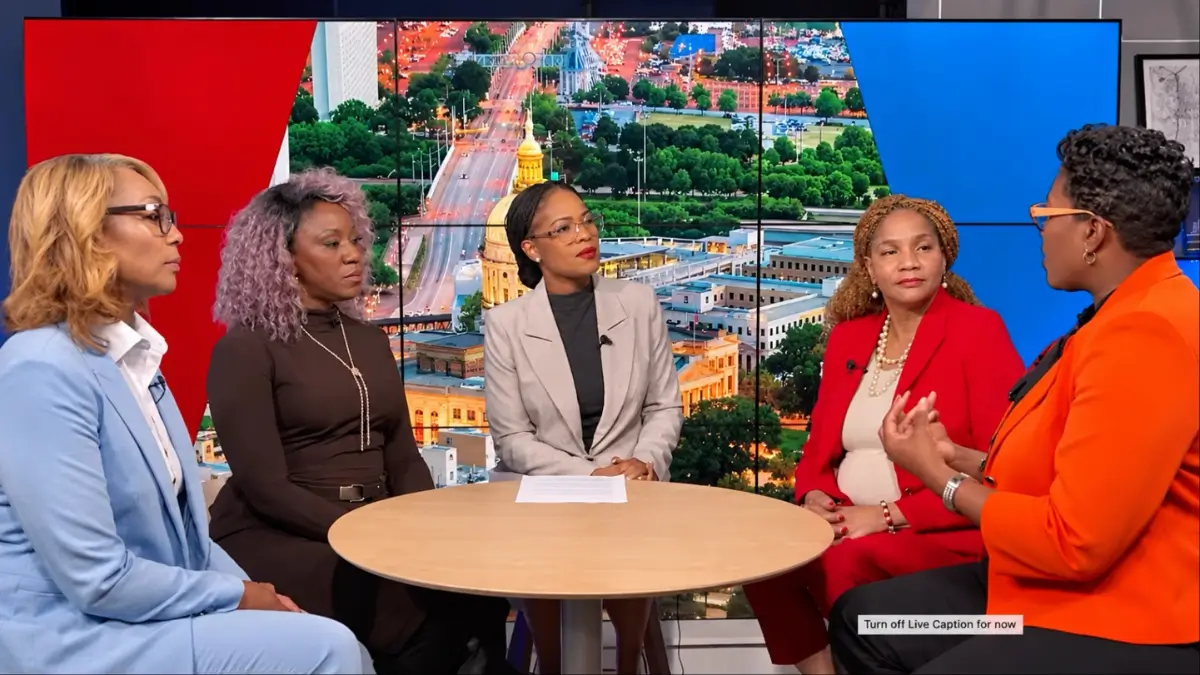
Georgia’s election of eight Black women to statewide offices should have marked a historic milestone in the state’s political story.
Instead, a video featuring four of the incoming officeholders discussing their victories and the challenges facing the state has unleashed a surge of racist abuse. Some MAGA supporters seized on the women’s remarks about “Black girl magic” to mock them with references to fried chicken and welfare stereotypes.
The backlash followed an interview on 11Alive with Insurance Commissioner-elect Keisha Sean Waites, Labor Commissioner-elect Nikki Porcher, State School Superintendent-elect Dr. Lydia Powell, and Public Service Commissioner-elect Shelia Edwards.
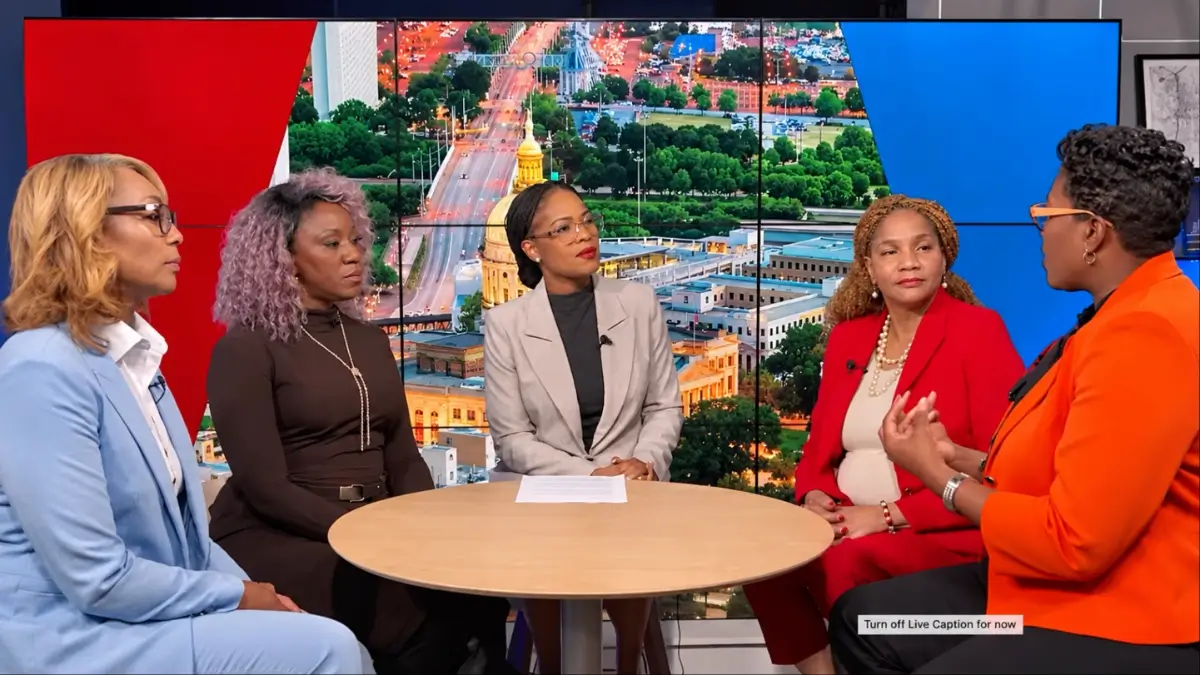
The quartet discussed a wide range of concerns—from rising household costs and higher insurance premiums to education funding and the weight of history on their shoulders. Yet a conservative social-media account grabbed onto the discussion’s racial undertones, turning their remarks into a racial joke.
End Wokeness circulated a clip in which the women addressed the phrase “Black girl magic,” presenting their words as something to mock. The post’s caption read: “Georgia’s new executives discuss ‘black girl magic’ (unironically) We live in hell.”
The post spawned a stream of comments that quickly slid into racist stereotypes, with critics ridiculing the women through references to Black culture, faith and welfare caricatures.
One commenter dismissed the officials with a quip about Florida politics, writing, “Haha… You might be. In Florida we have rule of law, not rule of Chaqueesha.”
Another leaned into a trope about Black women and the supernatural, posting, “I’ve seen a lot of magic, hence why everything is behind glass at the Walmart.”
A third remark invoked the same stereotype more directly, saying, “We used to call that voodoo.”
Others attacked the women through racist caricatures of Black food and culture, with one commenter writing, “SORRY I do not need to listen to the CHURCH’S FRIED CHICKEN NIGHT CREW talking — !!!”
Another reply featured a crude meme depicting a welfare queen, complete with exaggerated lips, lashes and long nails, alongside the caption, “Georgia government be like …”
The attacks arrive as Georgia stands on the cusp of a historic leadership shift, moving from red to blue.
Eight Black women won statewide offices in the midterm elections, marking an unprecedented milestone in Georgia’s political history. The group includes Gov.-elect Keisha Lance Bottoms, Attorney General-elect Tanya Miller, Secretary of State-elect Penny Brown Reynolds and Agriculture Commissioner-elect Katherine Juhan-Arnold, along with the four women featured in the 11Alive interview.
The four women in the video each defeated their Republican rivals by more than 350,000 votes, according to Georgia’s election results updated on Nov. 20 by the Secretary of State’s Office.
But the interview also underscored that their victories are not merely symbolic. Georgia families are grappling with higher electricity bills, increased auto insurance costs, rising grocery prices and housing expenses—issues they highlighted repeatedly during their campaigns.
Edwards said voters across the state voiced frustration with soaring power bills and promises that costs would drop.
“I traveled across Georgia, from Macon to Columbus, Albany to Savannah, Augusta to everywhere, and people said the same things. They’re sick and tired of what’s happening, and they felt like they were fed, you know, baloney about power-rate declines,” Edwards said.
She added, “The power bills keep rising, and people are struggling,” stating, “My priority will always be Georgia’s consumers, not the shareholders of Georgia Power.”
Waites said insurance costs were another major concern, telling 11Alive, “The No. 1 complaint I’ve heard from Georgians is that auto insurance rates are simply too high, and we need to address that,” she said.
She plans to roll out proposals in her first 100 days aimed at curbing insurance costs, including reforms to how credit scores and ZIP codes influence rates, while also seeking stronger protections for consumers facing delayed or denied claims.
Porcher said she aims to make the Department of Labor more accessible to Georgians seeking job training, employment support, or assistance in changing careers.
“There are many programs out there that people don’t know exist, because the Department of Labor hasn’t done a good job of letting folks know they’re there,” Porcher said.
Powell added that Georgia’s education funding model must better account for students living in economic hardship, pointing to a formula that has hardly changed since 1985.
“Over 70% of our children are economically disadvantaged, yet there is no poverty weight in the current formula,” Powell said.
The group also resisted the notion that their achievements can be reduced to the phrase “Black girl magic,” arguing that such labels overlook the credentials and effort behind their campaigns.
Waites contended that the expression minimizes what they have accomplished.
“It downplays the contributions. It downplays the work, the experience, the education we all bring to the table,” Waites said.
Porcher noted that voters saw a slate of qualified candidates prepared to lead.
“When people saw a group of Black women running, I think they thought, ‘Finally, here’s someone who’s qualified, educated, capable of doing the job and bringing others along,’” Porcher said.
The backlash also ties to a separate MAGA dispute over Bottoms’ transition team. End Wokeness criticized the racial makeup of a photo featuring her staff, highlighting the number of Black individuals while arguing that the team did not reflect Georgia’s demographics. Critics also faced accusations of hypocrisy from those who noted Republicans’ long-standing resistance to diversity initiatives.
The eight women are slated to assume office in January 2027, confronting the pressure to deliver on their campaign promises while enduring the scrutiny that attends breaking new ground in a state historically defined by racial politics.